
By Kalu Okoronkwo
At first glance, the news felt disconcerting and almost surreal. Of all Northern Nigerian Muslim politicians, why was Senator Rabiu Musa Kwankwaso, former governor of Kano State and presidential candidate of the New Nigeria Peoples Party (NNPP) in the 2023 general election, singled out by Republican lawmakers in the United States for possible visa restrictions and asset freezes under the proposed Nigeria Religious Freedom and Accountability Act of 2026?
The instinctive reaction was that of shock. Yet a closer examination of the facts reveals something more familiar, more political, and more revealing about power, and the cost of constructive criticism, and principled independence.
Anyone with even a passing knowledge of Kwankwaso’s political journey knows that accusations of religious extremism sit awkwardly, if not absurdly on his record. His career has been defined less by religious fervour than by restraint, negotiation, and an often costly refusal to surrender governance to mob sentiment or clerical absolutism.
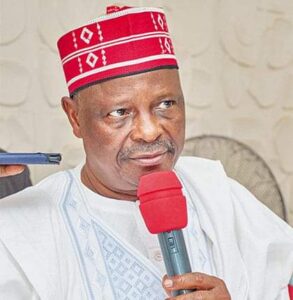
What now appears as an attempt to stigmatise and politically isolate Kwankwaso did not arise from extremism, fanaticism, or sectarian hatred. Rather, it emerged from something far more consequential in international politics: a refusal to nod obediently, a willingness to question a dominant narrative, and the courage to dissent publicly.
On November 2, 2025, Kwankwaso responded to remarks by President Donald Trump, following the United States’ designation of Nigeria as a Country of Particular Concern over alleged religious persecution. While many Nigerian political figures opted for silence or quiet diplomacy, Kwankwaso spoke calmly, deliberately, and with statesmanlike restraint. “I have noted with increasing concern the heightened pronouncements on Nigeria by President Donald Trump,” “It is important to emphasise that our country is a sovereign nation whose people face different threats from outlaws across the country. The insecurity we face does not distinguish based on religious, ethnic, or political beliefs.”
He rejected confrontation and instead proposed cooperation. “The United States should assist the Nigerian authorities with better, cutting-edge technology to tackle these problems, rather than posing a threat that could further polarise our country,” Kwakwanso wrote. And in a moment that revealed both patriotism and foresight, he appealed to Nigerians themselves: “This is an important moment where we should emphasis unity of belonging over division. God bless Nigeria.”
In today’s ideological climate, however, nuance is often mistaken for defiance and defiance recast as guilt. What followed was swift and personal. One of the co-sponsors of the proposed legislation, U.S. Congressman, Riley Moore, abandoned policy debate for accusation. On social media, Moore responded not with facts, but with a loaded indictment: “Governor, do you care to comment on your own complicity in the death of Christians? You instituted Sharia law. You signed the law that makes so-called blasphemy punishable by death.”
In a single tweet, decades of history were flattened, context erased, and complexity replaced with moral absolutism. Kano’s Sharia experience long documented as contested, reluctant, and cautiously implemented under Kwankwaso was repackaged as proof of extremist intent. His silence was interpreted as guilt; his restraint as evasion.
Kwankwaso did not respond, not because he lacked an answer, but because some accusations are not designed for dialogue, only for damage. No social media exchange could capture the political pressure, personal risk, and institutional resistance he faced in 2000, when Sharia was forced onto the political agenda against his initial opposition. Nor could it convey his insistence that only the state had the authority to punish offenders and that non-Muslims must not be intimidated; words that remain on record, unambiguous and humane.
As governor of Kano State between 1999 and 2003, Kwankwaso presided over one of the most emotionally charged moments in Northern Nigeria’s modern history: the agitation for the introduction of Sharia law in 2000. Contrary to revisionists’ narratives now circulating abroad, he was not a cheerleader for Sharia. He was, in fact, deeply reluctant. Contemporary reporting from the period shows a governor trapped between popular pressure, clerical insistence, and his own convictions about state authority and social cohesion.
Crucially, Kano’s Sharia bill was not sponsored by Kwankwaso’s government. It was a private legislative initiative, one he resisted for months. This distinction matters. It placed him at odds with powerful religious interests and sections of the public. The pressure became so intense that he temporarily withdrew from public engagements for his own safety, delegating appearances to his deputy, Alhaji Abdullahi Ganduje, who himself bore the brunt of public anger, including a widely reported attack during a religious procession.
When Sharia was eventually launched, Kwankwaso’s words were revealing. He warned against vigilantism and insisted that only the state had the authority to punish offenders. He urged protection for non-Muslims. This was not the language of a zealot; it was the language of a governor struggling to impose order, restraint, and legality amid volatile passions.
Even after the declaration, his implementation of Sharia was widely regarded as cautious, if not lukewarm. That caution earned him no favours. His uneasy relationship with influential clerics persisted and became a decisive factor in his defeat in the 2003 gubernatorial election by Ibrahim Shekarau, the preferred candidate of the clerical establishment. In a political culture where fanaticism is often rewarded, Kwankwaso paid the price for moderation.
Ironically, this same moderation fueled bizarre conspiracy theories about his identity, including the patently false claim that he was not Hausa-Fulani at all. Such rumours resurfacing years later in the media underscored how deeply his refusal to conform unsettled entrenched expectations.
By any fair political or sociological assessment, Kwankwaso is an unlikely poster boy for religious extremism. Why, then, did he become the focus of legislative ire in Washington?
The answer lies not in Kano in 2000, but in Washington decades later. Kwankwaso was the only nationally prominent Nigerian politician to openly critcise the United States’ designation of Nigeria as a Country of Particular Concern. His objection was measured, not belligerent. He argued that the label oversimplified a complex security crisis, risked inflaming interreligious tensions, and privileged confrontation over cooperation.
Congressman Moore responded not with engagement, but with accusation, collapsing history, nuance, and context into a single inflammatory charge that cast Kwankwaso as complicit in religious violence. Kwankwaso, instead of brit brat, chose silence, refusing to dignify provocation with a performative exchange ill-suited to the gravity of the issues at stake.
This incident reflects a familiar global pattern: foreign political actors publicly challenge U.S. policy, particularly on morally charged issues but such disagreement is often personalised. In Kwankwaso’s case, criticism was reframed as guilt, and complexity reduced to caricature.
It is also worth noting that the bill remains at a preliminary stage. The U.S. legislative process is long and exacting, and history shows that most Nigeria-focused standalone bills never advance beyond committee consideration. In practical terms, the threat may amount to more of symbolism than sanction.
Yet symbolism matters. And in an ironic twist, what was intended as political censure may become political capital. For years, Kwankwaso has been portrayed as a regional figure struggling to gain national traction. Being cast fairly or not as a global dissenter against American policy could recast him as a broader symbol: a politician willing to speak to power, local and foreign, even at personal cost.
From principled critic to political target, Kwankwaso’s story is less about religion than about independence. It is a reminder that in international politics, as in local governance, moderation is often misunderstood, criticism is rarely forgiven.
Ultimately, this incident reveals less about Kwankwaso than about the nature of contemporary power. Public criticism of U.S. policy by foreign political figures especially from the Global South is often tolerated only when it is quiet, deferential, and inconsequential. When it is open, principled, and resonant at home, it becomes threatening.
Kwankwaso’s inclusion in the bill before the United States Congress appears less about his record than about the symbolic danger of his voice: a northern Muslim leader rejecting a simplistic religious framing of Nigeria’s crisis and insisting instead on sovereignty, cooperation, and national unity.
Ironically, what was meant as censure may yet become validation. In being singled out, Kwankwaso has been recast from a regional political force into a national, even transnational symbol of principled disagreement. History has the tendency of favouring those who speak when silence is expected.
When criticism proves costly, someone must still pay the price. Kwankwaso is paying it. But in politics, as in life, the cost of speaking the truth is often the down payment on legacy.
Kalu Okoronkwo is a communications strategist, a leadership and good governance advocate dedicated to impactful societal development and can be reached via kalu.okoronkwo@gmail.com