

By Kalu Okoronkwo
As Nigeria approaches the pivotal 2027 general elections; an election that could redefine civic trust, political legitimacy and national direction, the country confronts a danger no serious democracy should tolerate for two decades: a political system operating on outdated demographic realities, governing today’s citizens with yesterday’s numbers.
Nigeria’s last official census was conducted in 2006. Since then, governance, planning and electoral architecture have relied on stale estimates and speculative projections rather than an updated democratic snapshot. This is not merely technical negligence; it is a constitutional and democratic failure with profound political, economic and social consequences.
At the heart of Nigeria’s democratic order lies the principle of equal representation, enshrined in Section 14 of the Constitution, which affirms that sovereignty belongs to the people and that government derives its authority from them. But how can governing institutions legitimately claim to represent a people they have not accurately counted in 20 years?
Electoral boundaries, federal allocations, legislative seats and political representation are fundamentally tied to population data. Without an updated census, Nigeria’s democratic map does not reflect the actual size, distribution or composition of her people. This is more than statistical stagnation; it is a structural distortion of citizens’ voice.

Since independence, census exercises in Nigeria have been fraught with controversy, politicisation and postponement. Colonial-era counts in the 1950s were disputed. The 1962 census, conducted under Prime Minister Tafawa Balewa, was cancelled amid allegations of manipulation. A second attempt in 1963 produced a figure of 55.6 million, but that too was challenged, particularly by southern leaders who accused the North of inflating numbers for political advantage within the federal structure.
The 1973 census under General Yakubu Gowon recorded 79.8 million people but was scrapped following widespread allegations of inflation. Public trust eroded further. The 1991 census under General Ibrahim Babangida recorded 88.9 million people. Though not free from criticism, it was officially accepted and became the planning baseline until 2006.
The 2006 census, conducted under President Olusegun Obasanjo by the National Population Commission (NPC), recorded 140.4 million people. It introduced biometric capture and gender disaggregation. Yet it also faced disputes over methodology and alleged undercounting in certain regions. Today, that figure is nearly two decades old.
Subsequent data used by government agencies and international institutions have largely been projections derived from 2006 figures using assumed growth rates. Nigeria postponed planned censuses in 2016 and 2022 due to funding constraints, insecurity and political delays. A 2023 exercise was again deferred. Current projections estimate the population at over 220m in 2024, potentially rising to between 232m and 247m by 2027. But projections are not substitutes for enumeration.
Nigeria has one of the world’s fastest-growing populations and the youngest demographics. Internal migration, urbanisation and displacement have dramatically altered the country’s demographic landscape. Lagos, Kano, Port Harcourt and Abuja have expanded significantly as new settlements have emerged. Millions of young Nigerians have reached voting age. Yet electoral structures remain anchored to demographic assumptions from 2006.
This disconnect creates serious risks: Constituencies may be grossly unequal in population size, rapidly expanding urban centres may be underrepresented, resource allocation may not reflect current needs, and electoral outcomes may not proportionately reflect contemporary demographic realities. In a democracy, numbers are power. When those numbers are outdated, representation becomes distorted.
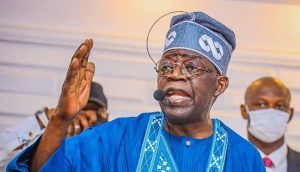
President Bola Ahmed Tinubu has expressed support for a technology-driven census incorporating biometric and digital systems. The NPC has indicated preparedness, reportedly holding approximately 760,000 tablets and planning collaboration with agencies such as the National Identity Management Commission.
However, repeated postponements have left the process in limbo. Only the President can formally set a census date, and that approval remains pending. As the country intensifies preparations for 2027general elections, priority should be given to conducting adequate, technology-driven census. Though some will argue that time is very short for a population census, but there is no better time to hold it than now. With appropriate technology, the process of head count will be seamless and achieved in record time.
Each delay increases costs as inflation escalates. Cost is reportedly estimated at over ₦900 billion. More importantly, every postponed exercise widens the gap between demographic reality and democratic structure.
In functional democracies, census data underpins electoral fairness. The United States conducts a decennial census to redraw congressional districts and ensure representation aligns with population shifts. European Union member states regularly update demographic data to maintain equitable political representation and fiscal distribution. Kenya’s 2019 census and Ghana’s 2021 census informed boundary reviews, policy planning and electoral adjustments.
These countries recognise a simple truth: credible elections begin with credible population data. Nigeria, by contrast, risks entering a consequential election cycle with a democratic framework built on outdated assumptions.
Population enumeration matters now because an inclusive, transparent and technologically driven census would provide a reliable basis for fair electoral boundary adjustment strengthen the legitimacy of electoral mandates, improve fiscal allocations tied to population, enable accurate planning in education, healthcare, housing and employment, enhance investor confidence and international credibility and restore public trust in governance institutions. A census is not merely a headcount; it is a constitutional instrument for fairness.
The traditional paper-based census model; manual forms, delayed digitisation and prolonged processing has proven slow, costly and vulnerable to error. Nigeria has an opportunity to harness digital devices and systems for an inclusive democratic count that is efficient, transparent, secure and representative. Digital enumeration offers a transformative alternative.
Countries such as Namibia in 2011, the United States in 2020, and Rwanda in 2022 successfully deployed mobile devices, GPS tagging and real-time data synchronisation to enhance accuracy and speed.
The United Nations’ Principles and Recommendations for Population and Housing Censuses affirm that digital integration improves data quality, reduces cost overruns and safeguards against manipulation.
For Nigeria, digital tools can also address geographic complexity through GPS-enabled mapping, human error via built-in data validation, processing delays through real-time transmission and transparency through auditable digital records.
A modern census must be secure, inclusive and technologically robust. Anything less would be inadequate for a country of Nigeria’s size and demographic dynamism.
Nigeria stands at demographic and constitutional crossroads. Two decades without updated enumeration is not merely an administrative oversight, it is a structural vulnerability.
Approaching the 2027 elections with a democratic snapshot frozen in time risks skewed representation, contested legitimacy and weakened public trust.
The time for postponement has passed. A comprehensive, inclusive and technologically enabled census is not a bureaucratic luxury; it is a democratic necessity.
Nigeria cannot afford to count votes without first counting its people. History will not be kind to a nation that chose delay over data, politics over precision, and expediency over constitutional responsibility.
The path to credible elections begins with credible numbers.
Kalu Okoronkwo is a communications strategist, a leadership and good governance advocate dedicated to impactful societal development and can be reached via kalu.okoronkwo@gmail.com