


By Kalu Okoronkwo
Housing is often viewed as a social necessity. In reality, it is one of the most powerful drivers of economic growth, social stability, and wealth creation. The United Nations recognizes adequate housing as a fundamental human right, while economists regard housing as a catalyst for economic development because it stimulates construction activities, creates jobs, attracts investment, increases household wealth, and strengthens social cohesion.
But, for millions of Nigerians, homeownership has long remained an elusive dream. Rising property prices, prohibitive mortgage rates, rapid urbanization, and stagnant income growth have combined to create one of the largest housing deficits in Africa. For decades, the average Nigerian worker has been trapped in a cycle of perpetual rent payments, watching the dream of owning a home drift further out of reach.
As a result, one of the most pressing challenges confronting millions of Nigerians is the anxiety that accompanies the annual rent cycle. It manifests in sleepless nights spent calculating how to meet another year’s rent amid rising living costs and in the frustration of moving from one apartment to another without the certainty of a permanent home.Amid these challenges, a quiet revolution is taking shape. At the centre of this transformation is the Federal Mortgage Bank of Nigeria (FMBN), an institution that is redefining affordable housing and democratizing access to homeownership through innovative financing models, cooperative housing structures, and people-centred mortgage products.
Under the leadership of its Managing Director and Chief Executive Officer, Alhaji Shehu Usman Osidi, and the guidance of its nine-member Board of Directors, FMBN has evolved beyond its traditional role as a financial institution. It is increasingly emerging as a strategic instrument of public policy, translating the Federal Government’s housing aspirations into tangible opportunities for ordinary Nigerians.
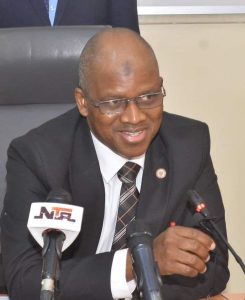
At the heart of FMBN’s intervention strategy is the National Housing Fund (NHF), a scheme established to mobilize long-term housing finance and make affordable mortgages accessible to contributors. Unlike conventional mortgages, which often attract double-digit interest rates and short repayment periods, the NHF Mortgage Loan provides contributors with access to up to ₦50 million to build, buy, renovate, or improve their homes after just six months of continuous contributions.
Countries that have successfully tackled housing deficits have done so through deliberate government intervention, affordable mortgage systems, and strong housing finance institutions. Nigeria’s housing challenge has never been a lack of demand. Rather, it has been the absence of affordable financing mechanisms capable of bridging the gap between income levels and housing costs. This is precisely where FMBN has positioned itself.
With lending rates as low as six percent and repayment tenors of up to thirty years, the NHF remains one of the most affordable mortgage products in Nigeria. In a country where commercial lending rates frequently exceed twenty percent, the NHF represents a significant policy intervention aimed at lowering barriers to homeownership for low and middle income earners.The significance of this intervention cannot be overstated. Housing affordability is determined not only by the price of a house but also by access to affordable financing.
By addressing this critical financing gap, FMBN is expanding access to homeownership beyond the wealthy elite to include workers, artisans, traders, civil servants, and self-employed Nigerians.The true measure of any housing policy lies not in policy documents but in human stories. For Salamatu Ahmed, a civil servant in Abuja, homeownership was once a distant aspiration. Years of contributing to the National Housing Fund and participating in a cooperative society culminated in a life changing moment when she received the keys to her three-bedroom bungalow at Woodhill Estate in Kuje.Her story mirrors that of Mariam Amos, another beneficiary who transitioned from the uncertainty of annual rent payments to the security and dignity of owning her own home.These stories underscore a simple but powerful reality: affordable housing is not about bricks and mortar. It is about security, dignity, stability, and peace of mind.
For thousands of NHF contributors across the country, FMBN’s interventions are transforming homeownership from an unattainable dream into an achievable reality.One of FMBN’s most innovative interventions is the Cooperative Housing Development Loan (CHDL). The concept is simple yet highly effective. Registered cooperatives with valid land titles can access substantial construction financing at a concessionary interest rate to build homes for their members. Upon completion, FMBN converts the construction facility into long-term mortgage loans for individual beneficiaries.This model addresses several challenges simultaneously. First, it reduces housing production costs through collective action. Second, it tackles financing constraints faced by low- and middle-income earners. Third, it creates a ready market for completed housing units, eliminating the problem of vacant estates that remain unaffordable to their intended beneficiaries.The Woodhill Estate project, developed through the Akacare Multipurpose Cooperative Society, offers a compelling example.
Through a Cooperative Housing Development Loan of nearly ₦1 billion, FMBN facilitated the delivery of affordable homes specifically designed around the income realities of cooperative members. The result was a fully subscribed housing estate where affordability was not an afterthought but the foundation of the project.This approach represents a significant departure from speculative real estate development and aligns housing production directly with actual demand.While mortgage accessibility addresses housing demand, increasing housing supply remains equally important. To bridge this gap, FMBN provides Estate Development Loans to private developers, state housing corporations, and housing cooperatives. These facilities support the mass production of affordable housing units while ensuring that completed homes remain within the reach of NHF contributors.This intervention is particularly important because housing deficits cannot be solved through mortgage financing alone. There must be an adequate supply of housing stock available to prospective homeowners.
By financing developers while simultaneously creating affordable mortgage pathways for buyers, FMBN is addressing both sides of the housing equation.A notable strength of FMBN’s housing strategy is its comprehensive approach. The Bank recognizes that housing needs vary across demographics and life stages. For existing homeowners, the Home Renovation Loan provides affordable financing for property improvements and upgrades.For contributors who prefer to build rather than buy, the Construction Loan offers access to finance for personal housing projects. For Nigerians in the diaspora, the Diaspora NHF Mortgage Loan provides a structured pathway to invest in housing back home.Perhaps the most innovative of these products is the Rent-to-Own Scheme, which allows beneficiaries to move into completed FMBN-financed homes and gradually acquire ownership through periodic payments spread over several years. This product effectively removes one of the greatest barriers to homeownership: the requirement for substantial upfront payments.
By transforming rent into equity, FMBN is creating a practical pathway to homeownership for thousands of Nigerian workers.Nigeria’s housing strategy is not evolving in isolation. Across the world, cooperative housing has demonstrated remarkable success in addressing affordability challenges. In Europe, housing cooperatives emerged as a response to the harsh housing conditions faced by industrial workers. Following the First and Second World Wars, cooperative housing played a critical role in rebuilding communities and restoring housing stock.Today, approximately 27 million Europeans live in cooperative housing arrangements. Sweden continues to operate one of the world’s most successful cooperative housing systems, where cooperatives account for a significant portion of the national housing stock and remain among the most affordable housing options available.
In Egypt, housing cooperatives have become an important instrument for expanding access to affordable housing and supporting urban development objectives.These international examples highlight a common lesson: housing affordability improves when governments, financial institutions, communities, and private developers collaborate within structured frameworks.
FMBN’s cooperative housing model reflects many of these global best practices while adapting them to Nigeria’s unique socio-economic realities.Beyond its social impact, affordable housing is increasingly recognized as an economic policy tool. Every housing project stimulates economic activity across multiple sectors, including construction, manufacturing, transportation, finance, and professional services. Each new housing development creates employment opportunities for architects, engineers, surveyors, builders, artisans, suppliers, and contractors.Housing investment also drives demand for cement, steel, tiles, furniture, electrical fittings, and other locally produced materials.
Consequently, FMBN’s interventions contribute not only to reducing the housing deficit but also to expanding economic opportunities and supporting national development.Affordable housing should therefore be viewed not as a welfare programme but as a strategic instrument for economic growth and social development.Nigeria’s housing deficit remains substantial, and no single institution can solve it alone. However, the Federal Mortgage Bank of Nigeria has demonstrated that affordable housing is achievable when public policy is aligned with innovative financing mechanisms and active citizen participation.
Through the National Housing Fund, Cooperative Housing Development Loans, Estate Development Loans, Rent-to-Own programmes, Construction Loans, Home Renovation Loans, and Diaspora Mortgage products, the Bank has built a comprehensive framework capable of expanding access to homeownership across multiple income groups.
As more Nigerians embrace the National Housing Fund Scheme, form cooperative societies, and take advantage of available housing products, the country can accelerate progress toward closing its housing deficit.The stories of Salamatu Ahmed, Mariam Amos, Patrick Ekpe, and thousands of other beneficiaries demonstrate that affordable homeownership is no longer an impossible dream.
For many Nigerians, FMBN is proving that a roof over every dream is more than a slogan. It is a public policy vision steadily becoming a reality.
Kalu Okoronkwo is a communications strategist, a leadership and good governance advocate dedicated to impactful societal development and can be reached via kalu.okoronkwo@gmail.com


зеркало 1xbet, 1xbet — это аналог основного сайта, которая обеспечивает пользователям доступ
к мультимедийным развлечениям в
случае.
Also visit my web-site … https://1xbet-ucyfl.cfd
I really love your blog.. Very nice colors & theme.
Did you develop this site yourself? Please reply
back as I’m looking to create my own personal blog and would love to find out
where you got this from or just what the theme is called.
Many thanks!
The cycle of perpetual rent payments you describe highlights a real barrier—breaking it requires not just policy but also operational efficiency in housing projects. I’ve seen teams save hours on inventory tracking with a no-fuss bulk barcode tool like bulkbarcodegenerator.pro, keeping construction supplies organized without extra IT overhead.
Üsküdar Uygun Fiyatlı Su Kaçağı Tespiti Balkon su yalıtım kaçağı için geldiler. Detaylı inceleme yaptılar, kalıcı çözüm sundular. https://artmedal.ir/
Üsküdar Termal Kamera ile Su Kaçağı Tespiti Vodafone Park yakınındaki ofisimize hızlıca ulaştılar. https://artmedal.ir/
Üsküdar Su Kaçağı Tamiri Üsküdar’ta su kaçağı tespiti için doğru adres olduklarını kanıtladılar. https://shorturl.at/7OUy2
Qulity articles oor revviews iss thee keey too bee a ocus forr the
people too viisit thee webb page, that’s what this
website iis providing.
Hi Neat post Theres an issue together with your web site in internet explorer may test this IE still is the marketplace chief and a good component of people will pass over your fantastic writing due to this problem
Your blog is a beacon of light in the often murky waters of online content. Your thoughtful analysis and insightful commentary never fail to leave a lasting impression. Keep up the amazing work!
Your blog is a breath of fresh air in the often stagnant world of online content. Your thoughtful analysis and insightful commentary never fail to leave a lasting impression. Thank you for sharing your wisdom with us.
Hi my family member I want to say that this post is awesome nice written and come with approximately all significant infos I would like to peer extra posts like this
Your blog is a treasure trove of valuable insights and thought-provoking commentary. Your dedication to your craft is evident in every word you write. Keep up the fantastic work!
Your blog is a treasure trove of knowledge! I’m constantly amazed by the depth of your insights and the clarity of your writing. Keep up the phenomenal work!
fss55h
I was suggested this web site by my cousin Im not sure whether this post is written by him as no one else know such detailed about my trouble You are incredible Thanks
Just wish to say your article is as surprising The clearness in your post is just cool and i could assume youre an expert on this subject Fine with your permission allow me to grab your RSS feed to keep updated with forthcoming post Thanks a million and please keep up the enjoyable work
I have read some excellent stuff here Definitely value bookmarking for revisiting I wonder how much effort you put to make the sort of excellent informative website
of course like your website but you have to check the spelling on several of your posts A number of them are rife with spelling issues and I in finding it very troublesome to inform the reality on the other hand I will certainly come back again
Discover the ultimate IPTV service with over 30,000 channels, movies, and series for everyone. Say goodbye to traditional TV and enjoy the future of entertainment today! (4K, FHD, HD) – Nordic IPTV.
I do believe all the ideas youve presented for your post They are really convincing and will certainly work Nonetheless the posts are too short for novices May just you please lengthen them a little from subsequent time Thanks for the post
Your blog is a constant source of inspiration for me. Your passion for your subject matter is palpable, and it’s clear that you pour your heart and soul into every post. Keep up the incredible work!
Hey there You have done a fantastic job I will certainly digg it and personally recommend to my friends Im confident theyll be benefited from this site
I do trust all the ideas youve presented in your post They are really convincing and will definitely work Nonetheless the posts are too short for newbies May just you please lengthen them a bit from next time Thank you for the post
I do trust all the ideas youve presented in your post They are really convincing and will definitely work Nonetheless the posts are too short for newbies May just you please lengthen them a bit from next time Thank you for the post
시흥출장안마
시흥출장마사지
시흥출장안마
시흥출장마사지
Nội dung trên F8BET được cập nhật khá thường xuyên, giúp người dùng dễ dàng theo dõi các thay đổi mới.
시흥출장안마
C168 là nền tảng giải trí trực tuyến đang nhận được sự quan tâm lớn từ cộng đồng người chơi nhờ hệ sinh thái đa dạng và trải nghiệm hiện đại. Tại đây, người dùng có thể tham gia nhiều sản phẩm hấp dẫn như cá cược thể thao, casino trực tuyến, game slot
Get ready to stream over 30,000 channels, movies, and series for all age groups with our IPTV service. Leave traditional TV behind and step into the future with high-quality 4K, FHD, and HD streaming. Try BEST IPTV now!
Điểm nổi bật của C168 nằm ở tốc độ nạp rút nhanh chóng, công nghệ bảo mật tiên tiến và đội ngũ chăm sóc khách hàng hoạt động 24/7. Bên cạnh đó, nhà cái thường xuyên triển khai các chương trình khuyến mãi hấp dẫn nhằm mang đến nhiều giá trị hơn cho người chơi.
Nền tảng cung cấp nhiều sản phẩm hấp dẫn như cá cược thể thao, casino trực tuyến, game slot và các trò chơi đổi thưởng phổ biến.
I’m noot sure why butt thios site iis loading vety slow
ffor me. Is anone elpse having this problem oor is iit a issje on myy
end? I’ll ccheck back later aand seee iif tthe
problem till exists.
My page: xmxxtube bokep
The focus on affordable housing is vital. Economically, this crisis highlights the need for integrated fintech solutions. Solving the liquidity gap requires not just loans, but digital financial inclusion-allowing people to manage savings and supplemental income via modern tools, like those found when you bossjl download apk. This digital bridge is key to unlocking wealth creation.
Pak Goat Nice post. I learn something totally new and challenging on websites
3vg985
kwmcs1
r1m3nl
There are some attention-grabbing deadlines in this article but I don’t know if I see all of them center to heart. There is some validity but I will take hold opinion until I look into it further. Good article , thanks and we would like extra! Added to FeedBurner as properly
jb4gp7
4yhvzi
Thanks for every other informative site. The place else may I get that kind of information written in such an ideal approach? I have a challenge that I am simply now working on, and I have been on the glance out for such info.
Your creative potential seems limitless. You appear to know a lot about this. This is an excellent, an eye-opener for sure! I have been looking everywhere for this! bad history are con artists. Hit me up! You appear to know a lot about this. I truly appreciate this post. This is an excellent, an eye-opener for sure! Thumbs up! Some nice points there. This is an excellent, an eye-opener for sure! You appear to know a lot about this. Thumbs up! This is an excellent, an eye-opener for sure! This is an excellent, an eye-opener for sure! Nice write up.
I will right away grab your rss feed as I can not find your email subscription link or newsletter service. Do you have any? Please let me know in order that I could subscribe. Thanks.