
By Kalu Okoronkwo
By the timetable of the Independent National Electoral Commission (INEC), and in accordance with the Electoral Act, the official campaign period for the 2027 Presidential and National Assembly elections commenced on August 19, 2026. Two days later, His Excellency, Mr. Peter Obi, former Governor of Anambra State and presidential candidate of the Nigeria Democratic Congress (NDC), formally flagged off his campaign at a world press conference, anchored on a simple but ambitious conviction: “Nigeria can work, and Nigeria must work.”
The statement, though simple, captures the central proposition of Obi’s 2027 campaign. Nigeria, he argues, is not condemned to perpetual crisis. Its enormous human and material resources can be converted into security, productivity and shared prosperity if managed with competence, discipline and purpose.
For Obi, therefore, the challenge in 2027 is not merely to establish himself as an alternative to Nigeria’s traditional political establishment, but to persuade Nigerians that his candidacy represents a credible and inclusive national project of transformation and rebirth. This may ultimately determine the significance of the Obi-Kwankwaso proposition in 2027.
The formal commencement of the campaign consequently brings into sharper focus a question that Nigeria’s opposition can no longer afford to postpone: Can the political energy that emerged around Obi in 2023 be transformed into a broad national coalition capable of competing for a genuinely national mandate in 2027?
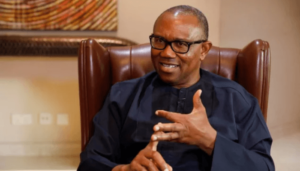
Obi’s political emergence cannot be fully understood without revisiting the 2023 presidential election. Running on the platform of the Labour Party (LP), he garnered more than six million votes and finished third. But the numerical outcome told only part of the story. His performance demonstrated that a candidate operating outside the traditional APC-PDP duopoly could build a formidable national constituency and disrupt the established architecture of Nigerian presidential politics. More significantly, his campaign galvanised an unusually energetic political movement among young Nigerians, professionals and citizens disillusioned with the old political order.
The most consequential phrase in Obi’s campaign address may not have been a promise, but an assertion of national possibility: “Nigeria can work, and Nigeria must work.” It rejects the fatalism that increasingly permeates conversations about the country. It suggests that Nigeria’s crisis is not necessarily the consequence of an absence of resources, talent or opportunity, but of the failure to convert those assets into functioning institutions, productive capacity and broadly shared prosperity.
The IMF’s June 2026 Article IV consultation estimated that poverty had reached 63 per cent at the national poverty line, while 27 million Nigerians were estimated to have experienced food insecurity in late 2025. At the same time, the IMF acknowledged improvements in macroeconomic outcomes following reforms, with growth projected at 4.1 per cent for 2026. The World Bank similarly notes that Nigeria has made progress in macroeconomic stabilisation, but warns that household incomes have not fully recovered and poverty remains high. Its April 2026 Nigeria Development Update argues that the critical task is to translate stabilisation into improved livelihoods, human-capital development and inclusive growth.
The position of these international agencies creates an important context for Obi’s campaign. His argument is not simply that Nigeria is in difficulty as that is already widely acknowledged. Obi’s proposition is that the country can organise its resources differently. The question is whether Nigerians will find his proposed method sufficiently credible to entrust him with the presidency.
Perhap, the clearest policy proposition of Obi’s campaign is the mantra of “from consumption to production.” It is an attractive formulation because it addresses one of Nigeria’s deepest structural contradiction: a huge population and consumer market that has not yet translated its scale into proportionate productive capacity. Obi’s declaration that “Nigeria cannot import its way to prosperity” captures the philosophy succinctly. His programme places agriculture, manufacturing, technology, construction, energy, creative industries and services within a broader production-centred economic strategy.
This would be more than campaign rhetoric if it can be translated into policy architecture. Production requires reliable electricity, reliable transportation, infrastructure, access to finance, structured taxation, security, skilled workers, etc. Also it requires functioning ports and logistics systems and a government capable of reducing rather than multiplying the cost of doing business. In other words, production is not a policy in isolation, it is the outcome of an ecosystem. That is where the sophistication of Obi’s economic proposition will ultimately be tested. The World Bank’s latest assessment makes precisely this distinction: Nigeria has made progress in restoring macroeconomic stability, yet those gains have not sufficiently translated into improved livelihoods. Obi appears to recognise this distinction when he argues that “reform is not the goal; better lives are.”
That formulation deserves attention as it suggests that economic policy should ultimately be judged not by the sophistication of its technical vocabulary but by whether ordinary Nigerians experience measurable improvements in their lives. Can families afford food? Can businesses survive? Can young people find sustainable employment? Can farmers reach their farms safely? Can children remain in school? Can healthcare become accessible? These are the metrics through which political promises eventually encounter daily reality.
Obi’s campaign also seeks to make a case for a different conception of public leadership. His assertion that “Public office is not a reward but a responsibility to the people” goes to the heart of the Nigerian governance question. For decades, political office has too often been treated as an instrument of patronage rather than a mechanism for public service. The consequence is a political culture in which appointments, contracts and access to state resources can become more important than measurable outcomes. Obi’s response is to emphasise fiscal discipline, prioritisation and measurement. His record as governor of Anambra State forms an important part of that argument, though presidential contest requires something more than citing past achievements.
Obi’s recognition that “No nation can prosper when its people cannot live, farm, travel, or do business safely” places insecurity where it belongs: at the centre of Nigeria’s economic development policy. Insecurity disrupts farming, interrupts education, raises transport costs, discourages investment, displaces communities, weakens local economies and undermines confidence in government.
Obi’s proposal for stronger intelligence coordination, improved policing and border management, greater use of technology and coordinated decentralisation of security management reflects an attempt to approach insecurity as a multidimensional national problem.
There is another element of Obi’s address that deserves attention: his insistence that presidential candidates should physically engage Nigerians. He argued that “true leadership requires presence and empathy” and that no one can genuinely lead communities affected by insecurity, criminality and flooding without visiting, listening and understanding them. This is more than campaign symbolism. Nigeria’s leadership crisis is partly a crisis of distance. Too often, government appears remote from the citizens who bear the consequences of its decisions. A campaign that travels beyond political strongholds, listens to communities and subjects its proposals to difficult questions could therefore offer a different model of political engagement.
Having presented a solid programme for the electorate’s consideration and elect him as president, the major challenge remains how Obi will convert his political goodwill to gains. Perhaps, the greatest political challenge before Obi is geographical. His 2023 performance demonstrated substantial national reach, but his strongest support remained concentrated in the South-East and parts of the South-South and North-Central regions. That reality cannot be wished away because Nigeria’s presidency is won nationally. Therefore, the question in 2027 is not whether Obi can retain his existing support; he should. The question is whether he can add substantially to it.
That means speaking convincingly to northern farmers, southern industrialists, urban professionals, traders, civil servants, students, religious communities, traditional institutions and millions of Nigerians whose political identities do not fit neatly into his 2023 narrative. This is where the idea of national consensus becomes crucial. Consensus does not mean everybody agrees with Obi. It means enough Nigerians across the country’s diverse political geography conclude that his leadership offers a progressive direction.
The presence of Senator Rabiu Musa Kwankwaso, former Governor of Kano State as Obi’s running mate gives the ticket an important political dimension. Their political backgrounds are different. Their strongest political constituencies have historically been different. Their political journeys have emerged from different parts of Nigeria. That difference could become an advantage. A successful presidential ticket should ideally demonstrate that its candidates understand the country beyond their immediate constituencies. The Obi-Kwankwaso configuration therefore has the potential to communicate a broader geographical and political reach.
With the two principals now sharing a coherent governing philosophy and operating as genuine partners, their differences in political backgrounds have become complementary strengths. It is now left for the electorate to decide how convincing their joint ticket will be to their benefit.
Again, it may be argued that the significance of Obi’s campaign flag-off ultimately lies in what it represents rather than what it accomplishes immediately. With the collapsing of the Obidient Movement and the Kwakwansiya Movemment into one formidable force, it represents the beginning of a transition from a political movement to an electoral machine. It represents the moment when the 2023 promise of an alternative encounters the harder demands of 2027. It represents the point at which Obi have demonstrated that his appeal is not confined to those who already believe in him, but represents an opportunity for Nigeria’s opposition to confront a difficult truth: the strongest alternative to an incumbent is not necessarily the most popular opposition personality. It is the candidate capable of constructing the broadest credible alliance around a compelling national purpose. Elections are not won by enthusiasm alone; they are won by alliances.
Obi’s political journey has already changed Nigeria’s electoral landscape. The 2023 election established that a candidate outside the traditional political duopoly could mobilise millions of Nigerians and force the political establishment to confront a new constituency.
The 2027 campaign must answer the next question: can that constituency become a national coalition? The answer will depend on whether Obi can retain his existing support while persuading millions who did not vote for him before. It will depend on whether his message of from production to consumption, fiscal discipline, human capital development and security can withstand detailed scrutiny. It will depend on whether the Obi-Kwankwaso ticket can embody genuine national partnership.
Furthermore, it will depend on whether some opposition parties can subordinate individual ambition sufficiently to create a coalition that Nigerians recognise as larger than any single politician or party. This is why the campaign flag-off matters. It is not simply the beginning of another electoral season. It is the beginning of the Obi-Kwankwaso test. Can their ticket become the symbol of national political consensus?
Can the energy of Obidients/Kwankwasiyya Movements become something larger than just a movement? Can a campaign that began as a revolt against the familiar political order evolve into a governing proposition capable of uniting a deeply divided country? These questions cannot be answered by slogans, rallies or social-media enthusiasm. They will be answered by the breadth of the alliances Obi and Kwakwanso can build now that the whistle has sounded: the voters they persuade beyond the traditional base, the quality of the programme presented to the Nigerian public and the confidence Nigerians ultimately place in them.
For now, the most important thing about Obi-Kwankwaso campaign is not that it has begun. It is what it is attempting to become: a winning force. Will it deliver the presidency to the NDC when the last votes are counted after the presidential election in 2027 and it will be another “also ran” for Peter Obi and Rabiu Kwakwanso. Only time will tell.
Kalu Okoronkwo is a communications strategist, a leadership and good governance advocate dedicated to impactful societal development and can be reached via kalu.okoronkwo@gmail.com