

…An affirmation of Atiku’s case for a production-based subsidy
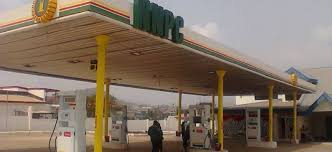
The announcement by the Tinubu administration of a 30-day petrol discount at NNPC filling stations exposes the contradictions and political opportunism that have characterised the government’s handling of the fuel subsidy question.
For months, President Bola Tinubu and the ruling APC have insisted that petrol subsidy is gone for good. When former Vice President Atiku Abubakar proposed a transparent, production-based subsidy to make locally refined petrol affordable, the administration and its propagandists dismissed the proposal as economically reckless.
Today, the same administration is announcing government-negotiated price ceilings, discounted petrol sales and arrangements to cushion consumers against market fluctuations. What has changed: the economic realities or the approach of the 2027 general elections?
While we welcome any genuine attempt to reduce the suffering of Nigerians, a temporary intervention must not become another exercise in political window-dressing. The first question is one of fairness and accessibility.
NNPC Retail has a network of more than 900 outlets nationwide. Spread across Nigeria’s 36 states and the Federal Capital Territory, that represents an average of roughly 25 stations per state and the FCT, although the actual distribution is far from uniform.
What happens to Nigerians living in communities without NNPC filling stations? Must they travel long distances, spending scarce money on transport, to access a government-sponsored discount? More troubling is NNPC’s own July 2026 report, which placed petrol availability across its retail network at just 52 per cent.
How does a government that has struggled to guarantee consistent petrol availability across its own retail network intend to deliver meaningful nationwide relief through that same network? The second question concerns the government’s increasingly convenient definition of subsidy.
Finance Minister Taiwo Oyedele insists that the proposed interventions are neither subsidies nor price controls. Yet the government is negotiating a ceiling below which petrol costs may be held, while proposing that refiners and importers recover any resulting shortfall when market conditions improve.
Who ultimately bears that shortfall? How will it be recovered? Will public resources, NNPC revenues or future consumers carry the burden? An intervention that transfers costs, postpones their recovery or uses public resources to make petrol cheaper raises legitimate subsidy-related questions that cannot be dismissed by changing its name.
The third question is why Nigerians must settle for 30 days of selective relief after more than three years of escalating hardship. Nigerians need permanently affordable petrol, not an election-season discount that expires after 30 days.
Atiku’s production-based subsidy proposal offers a more coherent direction: support domestic refining through transparent, targeted and time-bound crude-pricing arrangements, with safeguards to ensure that lower production costs translate into lower pump prices for consumers across the country.
It is designed to strengthen local production, reduce avoidable costs and provide relief beyond a handful of retail outlets. Interestingly, the Tinubu administration is now also discussing forward crude sales to domestic refiners. This reinforces the case for examining production-side interventions rather than treating them as economic heresy simply because Atiku proposed them.
The Tinubu government cannot condemn Atiku’s proposal in September and embrace the logic of petrol-price intervention in October while pretending there is no contradiction. Policies are made for the welfare of people. People are not created to suffer for the sake of policies.
We challenge the administration to publish the details of its proposed price modulation, disclose the financial implications, identify all participating outlets and explain how Nigerians without access to NNPC stations will benefit.
Most importantly, the government must explain how this intervention will translate into lower transport fares, cheaper food and meaningful reductions in the cost of living. Nigerians deserve an enduring policy response, not temporary political relief calculated against the electoral calendar.
It is particularly revealing that this announcement comes barely a day after Daniel Bwala, President Tinubu’s Special Adviser on Policy Communication, acknowledged on national television that the administration’s economic reforms had pushed more Nigerians into poverty.
On Channels Television’s Politics Today on Wednesday, Bwala admitted that more Nigerians had fallen into poverty as a consequence of the government’s reforms. When even the President’s own adviser acknowledges that government policies have pushed Nigerians deeper into poverty, it becomes indefensible to continue treating those policies as untouchable.
The question is no longer whether Nigerians are suffering. Even the Presidency has acknowledged it. The question is why the government waited until the approach of another election to begin contemplating measures it previously dismissed when Atiku proposed them.
If the Tinubu administration has finally recognised that government intervention is necessary to protect Nigerians from unbearable petrol prices, it should have the humility to acknowledge that reality instead of playing politics with the welfare of citizens.
Nigerians cannot eat economic theories, fuel their vehicles with political propaganda or feed their families on promises of future prosperity. President Tinubu needs to be reminded that between 1999-2007, fuel subsidy was not removed nor were taxes increased yet the government of that era grew the Nigerian economy to number one in Africa. But today, with all the increases, Nigeria is number three.
The welfare of Nigerians must come before Tinubu’s political chess game and the survival of an administration increasingly preoccupied with securing another term.