


By Kalu Okoronkwo
The National Agency for Food and Drug Administration and Control (NAFDAC) was established in 1993 in the aftermath of Nigeria’s devastating 1990 paracetamol syrup poisoning disaster, which was associated with at least 109 child deaths linked to diethylene glycol contamination. Its creation represented a critical institutional intervention intended to strengthen public protection against unsafe medicines and other hazardous consumer products.
More than three decades after its establishment under Decree No. 15 of 1993 and subsequent amendments, the existence of NAFDAC has not eliminated the threat of substandard and falsified medicines, adulterated foods and potentially hazardous beverages.
This contradiction raises a fundamental question that goes beyond the existence of regulatory laws or the visibility of enforcement operations. How effectively has NAFDAC translated its statutory mandate into tangible protection for human life? The persistence of unsafe products in the marketplace demands an incisive examination of regulatory oversight, enforcement capacity, institutional accountability and the gap between the promise of public protection and the realities confronting Nigerian consumers.
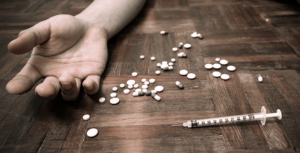
NAFDAC’s establishment was an important response to the need for effective regulation of medicines, foods, beverages and other products within its statutory mandate. But creating an agency, however necessary, is not the same as eliminating the problem it was designed to address. Legislation can confer authority, institutions can establish procedures, and regulators can recruit inspectors and acquire laboratory equipment. The ultimate test is whether these mechanisms consistently protect the public.
That distinction became painfully clear during the My Pikin teething medicine disaster of 2008–2009. A joint investigation involving Nigerian public-health authorities and international experts identified 57 poisoning cases, with 54 dead, among children aged between one to three years. Investigators detected diethylene glycol contamination in samples of the implicated medicine recovered from patients’ homes and in batches associated with its manufacturer. NAFDAC initiated a recall, and the manufacturing facility was shut down.
The US Centers for Disease Control and Prevention (CDC) described the incident as Nigeria’s second and largest diethylene glycol-associated poisoning outbreak since 1990. The tragedy remains especially disturbing because the victims were young children whose caregivers had reason to believe they were administering medicine to relieve discomfort. The product was not merely defective merchandise; it was a substance entrusted with a therapeutic purpose that instead became associated with fatal poisoning.
In recent years, concerns about falsified medicines, unwholesome foods and unsafe beverages have continued to expose weaknesses in Nigeria’s product safety environment. Reports of enforcement operations and product seizures point to the scale of the challenge. But the discovery of unsafe products does not, by itself, establish how many people have been harmed or does it prove regulatory negligence in every case.
In Lagos, Onitsha, Port Harcourt, Aba, Kano and other commercial cities, the circulation of unwholesome products raises questions about the effectiveness of inspection, surveillance, distribution controls and the enforcement of existing standards. According to figures attributed to NAFDAC’s enforcement operations, products valued at approximately ₦22.73 billion were destroyed between January and August 2026.
During the same eight-month period, the agency reportedly recorded 5,542 enforcement activities, conducted 213 raids, documented 821 product-seizure entries, closed or sealed 179 premises and made 52 arrests. It also handled 474 new cases, concluded 295 cases and carried out 22 destruction exercises.
These figures suggest considerable enforcement activities, but their public health significance depends on what they reveal about the effectiveness of regulation. How many dangerous products were intercepted before reaching the markets and to the consumers? How many investigations resulted in successful prosecutions? And how effectively were the supply chains behind the offences dismantled? Such questions are essential because the number of raids conducted or the value of goods destroyed cannot, on their own, establish that the public is safer.
The My Pikin investigation offers a sobering illustration of the limits of reactive enforcement. The CDC report found that 28 per cent of the affected children had received the implicated medicine after the recall had been announced. This finding underscores the importance of rapid public communication, effective product tracing and the timely removal of dangerous products from circulation. A recall is indispensable, but its success depends on whether the warning reaches consumers and whether the affected product can be withdrawn before further exposure occurs.
When a product itself becomes the source of danger, consumers may have little means of protecting themselves. They depend on regulators, manufacturers, distributors and retailers to ensure that what reaches the market is safe.
Consider the case of a young man who reportedly developed complications and died after taking antimalarial medication purchased from a pharmaceutical outlet. Without verified details, the cause of his death cannot responsibly be attributed to a falsified or contaminated medicine. Nevertheless, such an account raises an important question: what safeguards can consumers rely on when a product purchased for treatment may itself pose a risk?
The same concern extends beyond medicines. Imagine a family buying palm oil to prepare a favourite meal, unaware that the product may have been adulterated. Consider parents purchasing fruit for their children without knowing whether it was handled or stored safely before reaching the market. For millions of Nigerians, these concerns reflect a wider anxiety about the safety and authenticity of products consumed daily in homes, workplaces, markets and healthcare facilities.
Recent enforcement operations have brought these risks into sharper focus, including investigations into suspected illegal production and repackaging of alcoholic and energy drinks using materials bearing the names of established brands.
At Zamfara Plaza, within the BBA Trade Fair Complex along the Badagry Expressway in Ojo, Lagos State, NAFDAC operatives reportedly uncovered a suspected illicit production or repackaging facility housed in a two-storey building. The operation followed intelligence gathering and surveillance concerning suspected counterfeiters operating within the Trade Fair International Market.
Two suspects, identified in reports as Chibuzor Okafor and William John, were arrested. Officials reportedly recovered drums, filters, packaging materials, a heating device and other equipment suspected to have been used in the operation. According to NAFDAC, some of the suspects were caught in the act.
Speaking during the raid, the Assistant Director of the agency’s Investigation and Enforcement Directorate, Mr Kunle Ojo, expressed concern about the scale of the discovery. “What we have discovered today is a lot, and it’s mind-boggling. We are here to protect the lives of many Nigerians,” he said. One of the most troubling aspects of the operation emerged from an explanation reportedly offered by one of the suspects.
Okafor, who identified himself as a drinks dealer, told Saturday Vanguard that he changed the bottles in which drinks were contained. “I deal on drinks. I change the bottle of the drink. It’s not that the bottle is not good. It’s the drink in there, because the other one is already damaged. So that’s why we are putting it to the next bottle,” he said.
The account raises a fundamental question for consumers: what exactly was inside those bottles, and could buyers establish whether the contents were genuine, properly manufactured and safe to consume? The answer depends on evidence from the investigation and, where necessary, laboratory analysis. The broader concern, however, is clear: packaging can create an impression of authenticity that the contents may not justify.
In Ondo State, many families are still grieving following the loss of loved ones after drinking contaminated local brew. No fewer than 49 people died with 182 hospitalized, after consuming Monkey Tail, a very popular local brew suspected to have been caused by methanol poisoning, highlighting the dangers posed by unregulated alcoholic drinks in the market.
A serious discussion of medicine safety must distinguish between falsified medicines, substandard medicines and contaminated medicines. Although these categories can overlap, they describe different problems and may require different regulatory responses. Falsified medicines involve deliberate deception about a product’s identity, composition or source. A criminal operator may imitate the packaging of a reputable brand, manufacture a product under a false identity or misrepresent its ingredients. Patients may believe they are purchasing a genuine medicine when the contents do not match what the label claims.
The danger is that a falsified product may contain the wrong ingredient, an incorrect quantity of the active ingredient, no active ingredient at all or a harmful substance. A patient receiving a falsified antibiotic, for example, may fail to obtain effective treatment. Someone relying on medication for a chronic or life-threatening condition may experience complications because the product does not deliver the expected therapeutic benefit.
Substandard medicines, by contrast, are authorised medical products that fail to meet applicable quality specifications or standards. The failure may result from manufacturing defects, inadequate quality control, degradation during storage or transportation, or other departures from required specifications. Unlike falsification, substandard quality does not necessarily imply deliberate fraud.
This distinction matters because the appropriate response must address the actual cause. A manufacturing defect calls for an investigation of quality systems and corrective action. Deliberate falsification requires investigators to trace the criminal supply chain and pursue appropriate enforcement. Both can endanger patients, but their causes and accountability pathways differ.
Contaminated medicines contain unwanted or harmful substances introduced during manufacturing, handling, storage or another stage of the supply chain. Contamination may occur accidentally because of inadequate quality control or results from deliberate adulteration. The My Pikin tragedy illustrates the devastating consequences when a toxic chemical enters a medicine intended for children.
These categories are not mutually exclusive. A falsified medicine may also be contaminated, while a substandard product may contain an unintended impurity. The concerns are: what the evidence establishes about the product, what hazard it presents and what failure allowed it to reach patients.
The consequences range from treatment failure and avoidable complications to poisoning and death. In some cases, the danger cannot be detected without laboratory testing. A medicine may have convincing packaging, an intact seal and an apparently legitimate registration number while its contents remain unsafe. Consumers cannot reasonably be expected to verify pharmaceutical composition by sight, smell or taste.
Food adulteration may involve the substitution of ingredients, concealment of defects, misleading labelling or the use of prohibited substances. Contamination may arise from unsafe raw materials, polluted water, inadequate sanitation, poor storage or failures in production hygiene. Similar weaknesses can compromise packaged water, soft drinks and alcoholic beverages.
A bottle of water may appear clean while containing a microbial hazard. A processed food may look wholesome while containing an undeclared or unsafe ingredient. A beverage may be sold under a familiar brand identity without having been manufactured by the legitimate producer.
These are different risks, but they share a common feature which consumers often lack the information or technical capacity to identify. Product safety therefore cannot rest primarily on the vigilance of individual buyers. It requires effective regulation, responsible manufacturing, reliable distribution systems and consequences for deliberate violations.
Successive NAFDAC administrations have contributed to the development of Nigeria’s regulatory framework. From Professor Gabriel Ediale Osuide, the agency’s pioneer Director-General, through the tenure of the late Professor Dora Akunyili, the technological modernisation associated with Dr Paul Orhii, the transitional leadership of Mrs Yetunde Oni and the regulatory reforms pursued under Professor Mojisola Christianah Adeyeye. Each administration has left its mark on the institution.
Akunyili became particularly associated with the high-profile campaign against counterfeit medicines. Orhii’s tenure was associated with efforts to introduce technology into product authentication and regulatory processes. Later administrations continued efforts to strengthen regulatory systems and improve institutional capacity. These contributions deserve recognition. However, institutional history must be assessed alongside present-day performance. The relevant question is whether successive reforms have produced consistent and measurable improvements in the safety of products available to ordinary Nigerians.
The challenge is not simply whether NAFDAC conducts raids, seizes goods or destroys products. It is whether enforcement disrupts the networks responsible for placing dangerous products on the market. When investigations end with the removal of goods from a warehouse, without adequately tracing their origin or identifying the people who financed, manufactured or distributed them, the underlying commercial network may survive. Effective enforcement must follow the product through the supply chain, establish how it entered circulation, identify responsible parties and pursue prosecution where the evidence warrants it.
Where a genuine manufacturing defect is involved, regulators must investigate the process that caused the failure and determine whether other batches are affected. Where falsification is established, investigators must trace the supply chain and gather evidence against those responsible. In both cases, recalls and public warnings must be timely, accessible and sufficiently specific to help consumers identify affected products.
The same principle applies to food and beverages. Factory inspections must go beyond paperwork to examine production hygiene, ingredients, water quality where relevant, packaging, storage and the systems used to maintain consistent safety. Registration should not be treated as a permanent guarantee that a product will remain compliant regardless of how it is manufactured, transported or distributed.
These responsibilities are complicated by informal supply chains, counterfeit branding, cross-border trade, limited consumer information and the commercial incentives that encourage some operators to cut corners. Such difficulties are reasons to strengthen surveillance, improve coordination and direct resources towards high-risk products and supply routes—not reasons to lower expectations of regulatory performance.
Where credible evidence establishes negligence, misconduct or corruption by public officials, accountability must extend to those responsible. At the same time, allegations must be investigated fairly, and arrests must not be presented as convictions. Regulatory credibility depends on both the willingness to act and the integrity of the process.
Unsafe products do not respect income, education or geography. A falsified medicine can enter an urban distribution network; contaminated food can reach a major retail outlet; and an adulterated beverage can be sold to consumers who have no reason to suspect wrongdoing. The economic consequences also extend beyond the immediate health risks. Families may face additional treatment costs, loss of income and prolonged care for affected relatives. Public hospitals may have to manage preventable complications, while legitimate manufacturers and traders can suffer reputational damage when counterfeiters imitate their products. Trust in the market and in regulatory institutions is weakened when consumers cannot confidently distinguish genuine goods from unsafe substitutes. These wider costs reinforce the need to treat product safety as a central public-health and governance concern, rather than merely an enforcement issue.
NAFDAC’s reported enforcement activities in 2026 demonstrate continued intervention against unsafe and non-compliant products. The volume of operations and the value of goods destroyed are important indicators of activity, but they do not, on their own, establish how much the risk to consumers has declined.
A credible assessment requires a broader set of performance measures. These should include the speed with which safety alerts are issued, the proportion of recalled products successfully removed from circulation, the time taken to investigate reported hazards, the outcomes of prosecutions, the recurrence of violations and the agency’s ability to identify dangerous products before they cause widespread harm.
A country’s public-health system is judged not only by the medicines it approves, the factories it inspects or the products it destroys. It is also judged by whether parents can reasonably trust the medicine they give their children, whether families can purchase food without undue fear of hidden hazards, and whether consumers can rely on the institutions responsible for product safety.
NAFDAC must therefore be judged by a demanding but fair standard: its ability to prevent harm, detect danger, respond promptly, enforce the law and demonstrate measurable improvements in public protection. No regulatory system can eliminate every risk. The question is whether Nigeria can make dangerous products harder to produce and distribute, identify hazards before they cause widespread harm, and ensure that those responsible face meaningful consequences.
The ultimate measure of NAFDAC’s success is not simply the monetary value of products destroyed or the number of raids conducted. It is the effectiveness of its vigilance, independence and enforcement in keeping unsafe products out of Nigerian homes and the consistency with which it protects the lives it was established to serve.
Kalu Okoronkwo is a communications strategist, a leadership and good governance advocate dedicated to impactful societal development and can be reached via kalu.okoronkwo@gmail.com.