

By Kalu Okoronkwo
Some lives become more compelling with the passage of time, not simply because of the positions their owners once occupied, but because their stories invite succeeding generations to reconsider what leadership should mean and what public service ought to leave behind. The life of His Excellency, Dr. Icha Emmanuel Ituma (OON), belongs to this category. His death in 2011, at the age of 64, marked the passing of a distinguished Nigerian statesman, diplomat, civil servant and scholar. But, beyond the sorrow of his departure lies a more enduring question about the moral foundations of leadership and the obligations of those entrusted with public responsibility.
More than a decade after his death, Dr. Ituma’s life presents an unfinished conversation with posterity: one that reaches beyond the familiar rituals of memorial remembrance but to confront a society increasingly challenged by questions of character, integrity, institutional responsibility, faith and the true meaning of leadership. What ultimately makes a public figure worthy of remembrance? Is it the number of offices occupied, the authority exercised or the political influence accumulated? Or is it the values embodied, the lives influenced and the principles bequeathed to generations yet unborn?
Born into the family of Chief Ituma Nwituma and Mrs. Okpo Ituma, fondly known as Ituma Ogo, of Inyimagu, Okposhi-Eheku, Ngbo, in present-day Ohaukwu Local Government Area of Ebonyi State, Dr. Ituma’s life offers an opportunity to revisit these fundamental questions. His career traversed public administration, executive government and international diplomacy, placing him at different moments within the evolving political and institutional history of southeastern Nigeria and the Nigerian state.
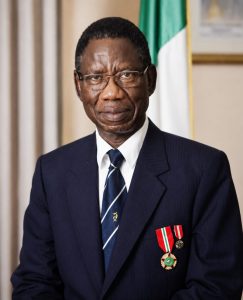
He served as Secretary to the State Government in the old Anambra State and old Enugu State before becoming the pioneer Secretary to the State Government of Ebonyi State under Governor Sam Egwu, between 1999 and 2003. He also served as Deputy Governor of the old Enugu State during the Third Republic under Governor Okwesilieze Nwodo. He rose through the civil service cadre to become a Permanent Secretary in old Enugu State and served as Sole Administrator of Enugu Local Government Council.
His public service journey eventually extended beyond Nigeria’s domestic political and administrative landscape when he was appointed Nigeria’s Ambassador to Australia, with concurrent accreditation to New Zealand, Papua New Guinea, Vanuatu and Fiji. These appointments, considered together, revealed a career that traversed public administration, executive government and international diplomacy. His journey tells us about the nature of true leadership and the kind of public servant a society should aspire to produce.
There is, perhaps, no more important question for a society struggling with the contradictions of governance than this: what should remain of a leader after the office has been vacated, the political influence has diminished and the individual has departed? Is leadership defined by the authority one exercises, the privileges one enjoys, the political networks one commands or the enduring value one contributes to humanity? And when history eventually separates the individual from the trappings of public office, what remains worthy of remembrance?
It is against this background that the life and public service of Dr. Ituma deserve a more reflective examination. His story is not simply about the offices he occupied or the administrations under which he served. It is about a professional journey that traversed different political dispensations, administrative structures and international responsibilities, providing an opportunity to interrogate the relationship between personal character and public authority.
History does not remember everyone who occupied an office with equal fervor. Some leaders become historical footnotes, while others become enduring moral and intellectual references. Their relevance survives because their lives represented something larger than the positions they occupied. They become associated with ideas, principles, institutional achievements or moral convictions that transcended the political circumstances of their time.
For instance, Nelson Mandela, South Africa’s first democratically elected Black president, remains one of the most recognisable symbols of reconciliation, political courage and the struggle against racial oppression. His presidency lasted only one term, from 1994 to 1999, yet his international moral stature was never dependent on remaining in office. His decision to leave the presidency after one term reinforced an important principle: leadership is not necessarily demonstrated by the ability to retain power indefinitely, but sometimes by the wisdom to relinquish it. Mandela’s legacy became larger than his presidency because his life embodied a struggle for human dignity, justice and national reconciliation. His example continues to challenge political leaders who confuse the possession of power with the purpose of leadership.
Also Julius Nyerere, Tanzania’s founding president, presents another instructive example. Often remembered as Mwalimu, or teacher, Nyerere’s influence extended beyond the political authority he exercised between independence and his retirement in 1985. His commitment to African self-determination, education, national unity and the philosophy of Ujamaa gave his political life an intellectual dimension that continued to attract debate long after he left office and died in 1999. His economic policies remain subjects of scholarly and political debate, but his place in African history is sustained by the larger questions he raised about nation-building, social responsibility and the meaning of independence.
Then there is Kofi Annan, the Ghanaian diplomat who became the seventh Secretary-General of the United Nations, serving from 1997 to 2006. His career illustrates the importance of diplomacy, institutional credibility and the pursuit of international cooperation. Annan’s public influence did not end with his departure from the United Nations. Through the Kofi Annan Foundation and other initiatives, his commitment to peace, democracy and responsible leadership continues to inform international conversations even after his death in 2018.
Dag Hammarskjöld, another former United Nations Secretary-General, offers perhaps an even more striking illustration of how public service can acquire a moral and philosophical dimension. His tenure from 1953 until his death in 1961 was marked by an intense commitment to international diplomacy and peacekeeping. His writings, particularly Markings, revealed a contemplative understanding of duty, sacrifice and the moral obligations of leadership. His legacy has endured not merely because he occupied one of the world’s most important diplomatic offices, but because of the principles with which he approached the responsibilities attached to the office. These figures came from different political, cultural and institutional backgrounds. Their achievements cannot be collapsed into a single category, nor should their historical stature be assumed to be identical. Yet they share an important leadership lesson: visionary and selfless leadership outlives times and seasons.
It is also against this broader tradition of enduring statesmanship that the public career of Dr. Ituma invites more reflection. The point is not to place him in an artificial competition with globally celebrated historical personalities, but to recognise that the questions of integrity, public service, institutional responsibility and moral leadership are universal. They are as relevant to the Nigerian public administrator as they are to the international diplomat or national president.
To appreciate the significance of Ituma’s career, one must look beyond the designation of Deputy Governor, Secretary to the State Government, Permanent Secretary or Ambassador or consider the breadth of the responsibilities these offices represented. His service as Secretary to the State Government(SSG) across three different state configurations is particularly significant. The old Anambra State, the old Enugu State and the newly established Ebonyi State represented different administrative and political challenges. To serve across these arrangements required an understanding of institutional structures, governmental processes and the importance of administrative continuity.
His appointment as pioneer SSG of Ebonyi State under Sam Egwu between 1999 and 2003 placed him within the formative history of the new state. The early years of a newly created state are especially consequential because they involve the establishment of administrative structures, the organisation of government institutions and the development of systems through which public responsibilities can be discharged.
The office of the Secretary to the State Government is not merely an executive designation. It is a critical coordinating institution within the architecture of state governance. It demands administrative maturity, discretion, political intelligence and the capacity to translate executive decisions into institutional action. Similarly, his experience as a Permanent Secretary in the old Enugu State civil service reflected the importance of professional administration in a political environment where governments and political personalities change, but the machinery of government must continue to function. For emerging leaders, Ituma’s career raises an important consideration: public service is not a ladder for personal elevation but a succession of responsibilities requiring competence, restraint and accountability.
The office of Deputy Governor, which Ituma occupied under Governor Okwesilieze Nwodo during the Third Republic in old Enugu State, provides an opportunity to reflect on the complexities of executive partnership and political responsibility. In Nigeria’s political environment, the relationship between governors and their deputies has historically presented its own institutional and political challenges. Beyond constitutional provisions, the relationship requires trust, mutual respect, political maturity and an understanding of the distinction between personal ambition and collective responsibility. A deputy governor must understand the limits of the office without diminishing its importance. The position demands the capacity to contribute to governance while recognising the institutional authority of the governor. It also requires the maturity to navigate political differences without allowing personal disagreements to compromise public administration.
Dr. Ituma’s appointment as Nigeria’s Ambassador to Australia, with concurrent accreditation to New Zealand, Papua New Guinea, Vanuatu and Fiji, added an international dimension to his public service career. Diplomacy is among the most delicate expressions of national leadership. An ambassador does not represent himself, he represents a country, its people, its interests and its international reputation. The office demands intellectual depth, cultural sensitivity, strategic judgment and the ability to build relationships across political and social differences. It also requires an understanding that national interests must be advanced through negotiation, credibility and constructive engagement. In this respect, his diplomatic appointment places him within a broader tradition of Nigerian public servants whose professional responsibilities extended beyond domestic administration into international representation.
Also being a faith leader, as Founder of Eternity in Focus Ministry, adds another dimension to Dr. Ituma’s public identity. For many leaders, faith provides a moral framework through which they understand human responsibility, the limits of personal power and the obligation to serve others. But the true test of faith driven leadership is not the visibility of religious identity. It is the extent to which spiritual convictions translate into ethical conduct. In Ituma, faith found expression in his honesty, compassion, humility, fairness and respect for human dignity. His tenacity to his faith influenced how the vulnerable were treated, how public resources were managed and how power was exercised during his service to the nation and work with humanity.
There is something deeply instructive about the fact that some individuals become more historically relevant after leaving office than they were while exercising political authority. The reason is that time gradually separates the individual from the privileges of office and allows society to examine the substance of the life behind the title.
When Mandela died in 2013, the world did not remember him simply as a former president. It remembered a man whose personal history had become inseparable from the struggle for freedom, reconciliation and human dignity. When Nyerere died in 1999, the questions surrounding African independence, nation-building, education and social responsibility continued to give his intellectual and political legacy relevance. When Kofi Annan died in 2018, the international community remembered not merely a former United Nations Secretary-General but a diplomat whose career had become associated with multilateral cooperation and the search for peaceful solutions to global challenges. And when Hammarskjöld died in 1961, his writings and approach to international service continued to influence conversations about the moral obligations of leadership.
These examples demonstrate that the death of a leader does not necessarily end the influence of his ideas. Sometimes, it is after death that the full significance of a life becomes more apparent. This is not also to suggest that every departed public servant will acquire international recognition or that all legacies will command universal agreement. Historical remembrance is shaped by context, achievement, controversy and the passage of time. But one principle remains constant: a life devoted to public responsibility can leave lessons that outlast the circumstances in which it was lived.
Ituma’s career deserves to be considered within this broader understanding of leadership. His journey through different administrations, his experience in state executive government, his professional advancement in the civil service, his diplomatic appointment and his faith leadership collectively offer a narrative of sustained public engagement.
His death in 2011 at 64 should not reduce his remembrance to a historical date or a catalogue of official engagements, rather, it should encourage a renewed examination of what public service ought to represent in a country like Nigeria still searching for enduring institutional values and credible leadership.
The greatest tribute to a departed statesman is not necessarily the number of ceremonies organised in his honour or the flattering adjectives attached to his name. It is the extent to which succeeding generations are willing to interrogate, preserve and apply the principles that made his public life worthy of remembrance.
The world has produced many celebrated leaders whose influence survived their political authority and whose legacies continued to inspire reflection after their deaths. Their examples demonstrate that leadership acquires its greatest significance when it transcends the individual and becomes a source of enduring values.
Ituma’s remembrance should similarly encourage a deeper conversation about the responsibilities of public life in Nigeria. The true measure of a life in public service is not simply how history remembers the individual, but what posterity learns from the principles that defined that life. And perhaps that is the unfinished conversation Dr. Icha Emmanuel Ituma leaves behind: that leadership must mean more than power, public service must mean more than office, faith must mean more than belief, and greatness must ultimately find its expression in character, integrity and service to humanity.
Kalu Okoronkwo is a communications strategist, a leadership and good governance advocate dedicated to impactful societal development and can be reached via kalu.okoronkwo@gmail.com.