


By Kalu Okoronkwo
I first met Governor Abba Kabir Yusuf some years ago at the Maitama residence of the National Leader of the New Nigeria Peoples Party (NNPP), Senator Rabiu Musa Kwankwaso. It was a tense evening. The election tribunal had just annulled the victory that brought Yusuf to office. He sat quietly, visibly shaken, while his mentor remained composed, steady, reassuring, and resolute. Kwankwaso calmly assured everyone present, including some principal members of the Kano State House of Assembly, that justice would prevail.
Watching from a distance that night, I drew a lasting conclusion: true mentorship is about shielding the mentee from the hawks while guiding them through the storm. That was the bond between Kwankwaso and Abba Kabir Yusuf, a bond forged in sacrifice, tested in adversity, and ultimately vindicated when the Supreme Court set aside earlier rulings that sought to overturn the governor’s mandate.
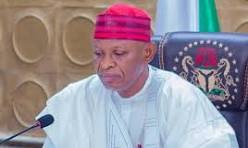
Politics is often described as a game of interests, but history remembers it as a theatre of character. Power may change hands and alliances may shift, but the true test of leadership lies in how loyalty, mentorship, and sacrifice are honoured. It is against this moral backdrop that Abba Kabir Yusuf’s political journey must now be examined, not merely as a party defection, but as a troubling transition from protégé to turncoat.
Abba Kabir Yusuf’s rise was neither sudden nor accidental. In 1999, he was appointed Personal Assistant to Rabiu Musa Kwankwaso during Kwankwaso’s first tenure as Governor of Kano State. He retained that role when Kwankwaso became Minister of Defence in 2003. In 2011, when Kwankwaso returned as governor for a second term, Yusuf was appointed Commissioner for Works, Housing, and Transport. Each stage of his ascent reflected deliberate political grooming and trust.
In 2018, Kwankwaso endorsed Yusuf to challenge the incumbent governor, Abdullahi Umar Ganduje, in the 2019 gubernatorial election under the platform of the Peoples Democratic Party (PDP). Yusuf lost and challenged the outcome at the election tribunal, but his petition was dismissed. Undeterred, Kwankwaso again stood by him. In 2022, Yusuf moved to the NNPP, where he was once more endorsed by Kwankwaso to contest the 2023 gubernatorial election, this time against Nasir Yusuf Gawuna of the APC. He was declared winner on 20 March 2023 and received his certificate of return on 29 March.
That victory was immediately challenged. The All Progressives Congress filed a petition at the Governorship Election Petition Tribunal, which, on 20 September 2023, controversially declared Gawuna the winner and sacked Yusuf. The ruling attracted intense national and international attention. The Court of Appeal upheld the tribunal’s decision, but the Supreme Court, on 12 January 2024, overturned both rulings and affirmed Abba Kabir Yusuf as the duly elected governor of Kano State.
For decades, Yusuf’s political identity was inseparable from Rabiu Musa Kwankwaso. This was no casual alliance of convenience; it was a painstakingly built mentorship rooted in trust, shared struggle, and loyalty. Kwankwaso did not merely endorse Yusuf; he defended him in moments of adversity, invested immense political capital when the odds were hostile, and stood firm when institutions and interests aligned against him. In Yusuf’s darkest moments, Kwankwaso’s resolve steadied the ship. That faith was ultimately vindicated by the Supreme Court’s judgment.
Through the Kwankwasiyya Movement, a grassroots political force that reshaped Kano’s political landscape, Kwankwaso nurtured a generation of ideologically grounded and battle-tested loyalists. Abba Kabir Yusuf was among the closest of this inner circle. He worked closely with Kwankwaso, absorbed the ethos of the movement, and rose through its ranks until he became governor. His growth was not accidental; it was mentorship in action.
Defection, in itself, is not a crime in politics. Democracies allow for ideological realignment and political evolution. But when defection occurs without conviction, principle, or respect for the ladder that made the climb possible, it crosses from strategy into betrayal. What makes Abba Kabir Yusuf’s defection particularly painful is not the party he chose, but the values he appeared to abandon.
This moment sends a chilling message: that loyalty expires once power is secured; that mentorship is useful only until ambition matures; that gratitude is optional in the face of convenience. It reinforces a dangerous culture in which people are treated as tools used, discarded, and forgotten once their purpose is served. In such a system, sacrifice becomes foolish, patience is mistaken for weakness, and trust becomes a liability.
The implications of this act may yet prove unfavourable to the governor. Political history is littered with examples of protégés who turned against their benefactors, only to discover that betrayal is a poor foundation for lasting power. Trust, once broken, rarely returns. Allies grow cautious, support bases fracture, and today’s reward for disloyalty can become tomorrow’s punishment.
Across history, betrayal has often been fatal politically and sometimes personally. Ins modern democracies, turncoats rarely control the consequences of their actions. They are welcomed briefly, used strategically, and discarded when convenient. Power respects strength, not ingratitude. Those who betray once are forever suspected of betraying again.
For the youth watching closely, the lesson is even more corrosive. Nigeria already grapples with deep political cynicism among young people, many of whom believe politics is devoid of integrity and that ideals are merely decorative language. This defection appears to confirm their worst fears. It teaches them that ideology is cosmetic, loyalty is naïve, and today’s mentor can become tomorrow’s obstacle. When leaders behave this way, they do not merely change parties; they poison the moral imagination of the next generation.
Beyond personalities, the broader damage is institutional. Societies are sustained not just by laws, but by trust, trust in leadership, in process, and in shared values. When betrayal is normalised at the top, it cascades downward. Friendships weaken, mentorship loses meaning, collective struggle evaporates, and politics becomes purely transactional. Everyone looks out only for themselves, and the nation pays the price.
Leadership is more than electoral success. It is consistency between words and actions. It is fidelity to those who stood firm when standing firm was costly. It is the courage to honour yesterday’s sacrifices even when today’s temptations beckon loudly. When power is pursued at the expense of character, the victory, however immediate is hollow.
History is rarely kind to turncoats. Political advantages may be enjoyed in the short term, but moral judgments endure far longer than electoral cycles. Time strips away propaganda and exposes motives. What remains is the record: who stood for principle, who honoured loyalty, and who chose expediency over conscience.
Abba Kabir Yusuf’s name now sits at a crossroads in Nigeria’s political memory. One path tells the story of a man lifted by mentorship, protected by loyalty, and sustained by collective struggle. The other tells a harsher story of ambition unmoored from gratitude, of power gained but trust lost, of a protégé who turned away from the very values that made his rise possible.
In the end, this is not just about Abba Kabir Yusuf or Rabiu Musa Kwankwaso. It is about the kind of politics Nigeria chooses to reward, whether loyalty still counts, whether mentorship still matters, or whether power must always come at the cost of principle.
Kwankwaso’s role in this story is not merely that of a wounded mentor; it is that of a political loyalty, structured grooming, and standing by one’s own in adversity. To betray such a figure is to betray more than a man; it is to betray an idea: that politics can still be anchored in gratitude, consistency, and trust.
Leadership is not defined by how quickly one adapts to power, but by what one refuses to abandon because of it. When loyalty is discarded for convenience, power may be gained, but something far more valuable is lost. Credibility erodes, moral authority collapses, and history takes notes.
In time, the noise will fade and the justifications will thin. What will remain is the record. And that record will ask a simple, unforgiving question: when the moment came to choose between loyalty and power, which did Abba Kabir Yusuf choose?
For now, the answer is written plainly in the sands of Kano politics, a cautionary tale of how the ultimate betrayal is not only against a mentor, but against the values that make leadership worth following.
History will decide, but it will not forget.
Kalu Okoronkwo is a communications strategist, a leadership and good governance advocate dedicated to impactful societal development and can be reached via kalu.okoronkwo@gmail.com

dxd global | Marka yönetimi Kıbrıs , sosyal medya yönetimi, promosyon ürünleri, Seslendirme Hizmeti , SEO , Dijital pazarlama , Videografi
i enjoy reading your articles, it is simply amazing, you are doing great work, do you post often? i will be checking you out again for your next post. you can check out webdesignagenturnürnberg.de the best webdesign agency in nuremberg Germany
This is my first time pay a quick visit at here and i am really happy to read everthing at one place https://heosexhay.net/
Well spoken—-aptly articulated and Gbamsolutly described .
Thank you for covering this so thoroughly. It helped me a lot.
i enjoy reading your articles, it is simply amazing, you are doing great work, do you post often? i will be checking you out again for your next post. you can check out webdesignagenturnürnberg.de the best webdesign agency in nuremberg Germany
The Night We Acted On Our Adult Instincts https://xnxx.pythonanywhere.com
Download PDF Manager for Local Files https://pdfmanagers.netlify.app
i enjoy reading your articles, it is simply amazing, you are doing great work, do you post often? i will be checking you out again for your next post. you can check out webdesignagenturnürnberg.de the best webdesign agency in nuremberg Germany
i enjoy reading your articles, it is simply amazing, you are doing great work, do you post often? i will be checking you out again for your next post. you can check out webdesignagenturnürnberg.de the best webdesign agency in nuremberg Germany
i enjoy reading your articles, it is simply amazing, you are doing great work, do you post often? i will be checking you out again for your next post. you can check out webdesignagenturnürnberg.de the best webdesign agency in nuremberg Germany
i enjoy reading your articles, it is simply amazing, you are doing great work, do you post often? i will be checking you out again for your next post. you can check out webdesignagenturnürnberg.de the best webdesign agency in nuremberg Germany
i enjoy reading your articles, it is simply amazing, you are doing great work, do you post often? i will be checking you out again for your next post. you can check out webdesignagenturnürnberg.de the best webdesign agency in nuremberg Germany
i enjoy reading your articles, it is simply amazing, you are doing great work, do you post often? i will be checking you out again for your next post. you can check out webdesignagenturnürnberg.de the best webdesign agency in nuremberg Germany
Escape Tsunami For Brainrots Script Download Free Latest Version https://tsuhub.pythonanywhere.com
Teknoloji Kıbrıs Teknoloji Kıbrıs, Kıbrıs teknoloji, teknolojikibris, elektronik eşyalar, Kıbrıs ucuz ev eşyası, teknolojik aksesuar kıbrıs
This was beautiful Admin. Thank you for your reflections.https://heosexhay.net/
i enjoy reading your articles, it is simply amazing, you are doing great work, do you post often? i will be checking you out again for your next post. you can check out webdesignagenturnürnberg.de the best webdesign agency in nuremberg Germany
i enjoy reading your articles, it is simply amazing, you are doing great work, do you post often? i will be checking you out again for your next post. you can check out webdesignagenturnürnberg.de the best webdesign agency in nuremberg Germany
dxd global | Marka yönetimi Kıbrıs , sosyal medya yönetimi, promosyon ürünleri, Seslendirme Hizmeti , SEO , Dijital pazarlama , Videografi
This is really interesting, You’re a very skilled blogger. I’ve joined your feed and look forward to seeking more of your magnificent post. https://heosexhay.net/ Also, I’ve shared your site in my social networks!
Very well presented. Every quote was awesome and thanks for sharing the content. Keep sharing and keep motivating others.https://heosexhay.net/
i enjoy reading your articles, it is simply amazing, you are doing great work, do you post often? i will be checking you out again for your next post. you can check out webdesignagenturnürnberg.de the best webdesign agency in nuremberg Germany
I’m often to blogging and i really appreciate your content. The article has actually peaks my interest. I’m going to bookmark your web site and maintain checking for brand spanking new information.
i enjoy reading your articles, it is simply amazing, you are doing great work, do you post often? i will be checking you out again for your next post. you can check out webdesignagenturnürnberg.de the best webdesign agency in nuremberg Germany
heart-shaped-steering-wheel
Download PDF Manager with Fit Width Mode https://pdfmanagers.netlify.app
such an indepth and professional article, i enjoy it, you can visit my page, the best webdesign agency in dortmund Germany https://webdesignagenturdortmund.de/ top webdesigners. Thank you
such an indepth and professional article, i enjoy it, you can visit my page, the best webdesign agency in dortmund Germany https://webdesignagenturdortmund.de/ top webdesigners. Thank you
such an indepth and professional article, i enjoy it, you can visit my page, the best webdesign agency in dortmund Germany https://webdesignagenturdortmund.de/ top webdesigners. Thank you
such an indepth and professional article, i enjoy it, you can visit my page, the best webdesign agency in dortmund Germany https://webdesignagenturdortmund.de/ top webdesigners. Thank you
i enjoy reading your articles, it is simply amazing, you are doing great work, do you post often? i will be checking you out again for your next post. you can check out webdesignagenturnürnberg.de the best webdesign agency in nuremberg Germany
such an indepth and professional article, i enjoy it, you can visit my page, the best webdesign agency in dortmund Germany https://webdesignagenturdortmund.de/ top webdesigners. Thank you
i enjoy reading your articles, it is simply amazing, you are doing great work, do you post often? i will be checking you out again for your next post. you can check out webdesignagenturnürnberg.de the best webdesign agency in nuremberg Germany
I do not even understand how I ended up here, but I assumed this publish used to be great
i enjoy reading your articles, it is simply amazing, you are doing great work, do you post often? i will be checking you out again for your next post. you can check out webdesignagenturnürnberg.de the best webdesign agency in nuremberg Germany
i enjoy reading your articles, it is simply amazing, you are doing great work, do you post often? i will be checking you out again for your next post. you can check out webdesignagenturnürnberg.de the best webdesign agency in nuremberg Germany
Escape Tsunami For Brainrots Script Fast Auto Reaction System https://tsuhub.netlify.app
i enjoy reading your articles, it is simply amazing, you are doing great work, do you post often? i will be checking you out again for your next post. you can check out webdesignagenturnürnberg.de the best webdesign agency in nuremberg Germany
such an indepth and professional article, i enjoy it, you can visit my page, the best webdesign agency in dortmund Germany https://webdesignagenturdortmund.de/ top webdesigners. Thank you
product/toplowrider
i enjoy reading your articles, it is simply amazing, you are doing great work, do you post often? i will be checking you out again for your next post. you can check out webdesignagenturnürnberg.de the best webdesign agency in nuremberg Germany
I like how you kept it informative without being too technical.
POV: You found the perfect present and didn’t have to wrap a single thing. 🎀 Shop the holiday gift set now!
such an indepth and professional article, i enjoy it, you can visit my page, the best webdesign agency in dortmund Germany https://webdesignagenturdortmund.de/ top webdesigners. Thank you
i enjoy reading your articles, it is simply amazing, you are doing great work, do you post often? i will be checking you out again for your next post. you can check out webdesignagenturnürnberg.de the best webdesign agency in nuremberg Germany
i enjoy reading your articles, it is simply amazing, you are doing great work, do you post often? i will be checking you out again for your next post. you can check out webdesignagenturnürnberg.de the best webdesign agency in nuremberg Germany
What I really liked is how easy this was to follow. Even for someone who’s not super tech-savvy, it made perfect sense.
Teknoloji Kıbrıs Teknoloji Kıbrıs, Kıbrıs teknoloji, teknolojikibris, elektronik eşyalar, Kıbrıs ucuz ev eşyası, teknolojik aksesuar kıbrıs
What an engaging read! You kept me hooked from start to finish.
dxd global | Marka yönetimi Kıbrıs , sosyal medya yönetimi, promosyon ürünleri, Seslendirme Hizmeti , SEO , Dijital pazarlama , Videografi
Teknoloji Kıbrıs Teknoloji Kıbrıs, Kıbrıs teknoloji, teknolojikibris, elektronik eşyalar, Kıbrıs ucuz ev eşyası, teknolojik aksesuar kıbrıs
naturally like your web site however you need to take a look at the spelling on several of your posts. A number of them are rife with spelling problems and I find it very bothersome to tell the truth on the other hand I will surely come again again.
i enjoy reading your articles, it is simply amazing, you are doing great work, do you post often? i will be checking you out again for your next post. you can check out webdesignagenturnürnberg.de the best webdesign agency in nuremberg Germany
This gave me a whole new perspective. Thanks for opening my eyes.
Your reflection strengthens the focus on practical implications.
I am truly thankful to the owner of this web site who has shared this fantastic piece of writing at at this place. https://heosexhay.net/
This was beautiful Admin. Thank you for your reflections.
dxd global | Marka yönetimi Kıbrıs , sosyal medya yönetimi, promosyon ürünleri, Seslendirme Hizmeti , SEO , Dijital pazarlama , Videografi
Pretty! This has been a really wonderful post. Many thanks for providing these details.https://heosexhay.net/
Download PDF Manager Pro Safe and Offline https://pdfmanager.surge.sh
Escape Tsunami For Brainrots Script High Success Rate System https://tsuhub.pythonanywhere.com
I like the efforts you have put in this, regards for all the great content.
A crisp and insightful reflection that adds professional value.
I really like reading through a post that can make men and women think. Also, thank you for allowing me to comment!
This was beautiful Admin. Thank you for your reflections.https://heosexhay.net/
The Night We Finally Gave In As Adults https://xnxx.pythonanywhere.com
Download PDF Manager with Dark Mode https://pdfmanager.surge.sh
naturally like your web site however you need to take a look at the spelling on several of your posts. A number of them are rife with spelling problems and I find it very bothersome to tell the truth on the other hand I will surely come again again.
Strong writing with points applicable to global commerce
Good post! We will be linking to this particularly great post on our site. Keep up the great writing
Pretty! This has been a really wonderful post. Many thanks for providing these details.
Escape Tsunami For Brainrots Script Free Safe Reliable Tool https://tsuhub.pythonanywhere.com
this is one of the best article i read today, i enjoy reading how you structure this article, keep up the good work, my site is the best webdesign freelancer in berlin in Germany, https://webdesignfreelancerberlin.de/ you can check it out. Thank you
this is one of the best article i read today, i enjoy reading how you structure this article, keep up the good work, my site is the best webdesign freelancer in berlin in Germany, https://webdesignfreelancerberlin.de/ you can check it out. Thank you
Teknoloji Kıbrıs Teknoloji Kıbrıs, Kıbrıs teknoloji, teknolojikibris, elektronik eşyalar, Kıbrıs ucuz ev eşyası, teknolojik aksesuar kıbrıs
This was beautiful Admin. Thank you for your reflections.
this is one of the best article i read today, i enjoy reading how you structure this article, keep up the good work, my site is the best webdesign freelancer in berlin in Germany, https://webdesignfreelancerberlin.de/ you can check it out. Thank you
naturally like your web site however you need to take a look at the spelling on several of your posts. A number of them are rife with spelling problems and I find it very bothersome to tell the truth on the other hand I will surely come again again.
Your insight is brief yet offers valuable direction.
Download PDF Manager with Dark Mode https://pdfmanager.surge.sh
Great information shared.. really enjoyed reading this post thank you author for sharing this post .. appreciated
dxd global | Marka yönetimi Kıbrıs , sosyal medya yönetimi, promosyon ürünleri, Seslendirme Hizmeti , SEO , Dijital pazarlama , Videografi
very informative articles or reviews at this time.
Teknoloji Kıbrıs Teknoloji Kıbrıs, Kıbrıs teknoloji, teknolojikibris, elektronik eşyalar, Kıbrıs ucuz ev eşyası, teknolojik aksesuar kıbrıs
Hi there to all, for the reason that I am genuinely keen of reading this website’s post to be updated on a regular basis. It carries pleasant stuff.
Mining Electricity Costs: How to Save Money https://dropeth.surge.sh
There is definately a lot to find out about this subject. I like all the points you made
Escape Tsunami For Brainrots Script Stable Build Latest Update https://tsuhub.pythonanywhere.com
I appreciate you sharing this blog post. Thanks Again. Cool. https://heosexhay.net/
dxd global | Marka yönetimi Kıbrıs , sosyal medya yönetimi, promosyon ürünleri, Seslendirme Hizmeti , SEO , Dijital pazarlama , Videografi
Awesome! Its genuinely remarkable post, I have got much clear idea regarding from this post
I like the efforts you have put in this, regards for all the great content.
Free Desktop PDF Manager Download Now https://pdfmanagers.netlify.app
Mining Rig Setup: Step-by-Step Tutorial https://dropeth.pythonanywhere.com
Hi there to all, for the reason that I am genuinely keen of reading this website’s post to be updated on a regular basis. It carries pleasant stuff. https://heosexhay.net/
For the reason that the admin of this site is working, no uncertainty very quickly it will be renowned, due to its quality contents.https://heosexhay.net/
very informative articles or reviews at this time.
this is one of the best article i read today, i enjoy reading how you structure this article, keep up the good work, my site is the best webdesign freelancer in berlin in Germany, https://webdesignfreelancerberlin.de/ you can check it out. Thank you
I truly appreciate your technique of writing a blog. https://heosexhay.net/ I added it to my bookmark site list and will
Mining Cryptocurrency on a Budget https://web3miners.netlify.app
this is one of the best article i read today, i enjoy reading how you structure this article, keep up the good work, my site is the best webdesign freelancer in berlin in Germany, https://webdesignfreelancerberlin.de/ you can check it out. Thank you
this is one of the best article i read today, i enjoy reading how you structure this article, keep up the good work, my site is the best webdesign freelancer in berlin in Germany, https://webdesignfreelancerberlin.de/ you can check it out. Thank you
this is one of the best article i read today, i enjoy reading how you structure this article, keep up the good work, my site is the best webdesign freelancer in berlin in Germany, https://webdesignfreelancerberlin.de/ you can check it out. Thank you
this is one of the best article i read today, i enjoy reading how you structure this article, keep up the good work, my site is the best webdesign freelancer in berlin in Germany, https://webdesignfreelancerberlin.de/ you can check it out. Thank you
this is one of the best article i read today, i enjoy reading how you structure this article, keep up the good work, my site is the best webdesign freelancer in berlin in Germany, https://webdesignfreelancerberlin.de/ you can check it out. Thank you
this is one of the best article i read today, i enjoy reading how you structure this article, keep up the good work, my site is the best webdesign freelancer in berlin in Germany, https://webdesignfreelancerberlin.de/ you can check it out. Thank you
this is one of the best article i read today, i enjoy reading how you structure this article, keep up the good work, my site is the best webdesign freelancer in berlin in Germany, https://webdesignfreelancerberlin.de/ you can check it out. Thank you
this is one of the best article i read today, i enjoy reading how you structure this article, keep up the good work, my site is the best webdesign freelancer in berlin in Germany, https://webdesignfreelancerberlin.de/ you can check it out. Thank you
Thank you for sharing superb informations. Your web-site is so cool. I am impressed by the details that you have on this website. It reveals how nicely you understand this subject. Bookmarked this website page, will come back for more articles. You, my pal, ROCK! I found simply the information I already searched everywhere and simply could not come across. What a great web site.
I appreciate you sharing this blog post. Thanks Again. Cool…
I appreciate you sharing this blog post. Thanks Again. Cool bro
I will immediately grab your rss as I can not find your e-mail subscription link or newsletter service. Do you’ve any? Please let me know so that I could subscribe. Thanks.
I appreciate you sharing this blog post. link gacor Thanks Again. Cool bro
I appreciate you sharing this blog post. Thanks Again. Cool bro Slot Gacor
wow bro appreciate you sharing this blog post. link gacor Thanks Again. Cool bro nicee amazing
I appreciate you sharing this blog post. kampungbet link gacor terbaik
**mitolyn**
Mitolyn is a carefully developed, plant-based formula created to help support metabolic efficiency and encourage healthy, lasting weight management.