

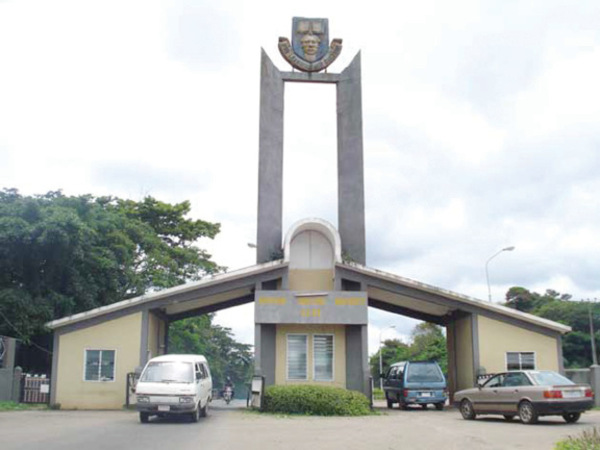
Nigeria’s university system is gradually being destroyed by political patronage, and many people are pretending not to see it.
Yesterday night, I had a long discussion with a childhood friend who is a senior lecturer and postgraduate coordinator in one of the universities in North-Central Nigeria.
What he revealed was disturbing, but sadly not surprising. According to him, university teaching positions roles that should be reserved for scholars, researchers, intellectuals and innovators are increasingly being converted into political compensation for loyalists, election foot soldiers and “errand boys” who served politicians during campaigns.
He explained that in many state-owned universities, the power of academic recruitment has quietly been hijacked by politicians, especially governors and their associates.
Departments are no longer allowed to recruit based on merit, academic competence or research capacity. Instead, Heads of Departments are allegedly confronted with candidates carrying instructions directly from Government House — individuals sometimes lacking the basic intellectual and academic requirements to function within a university environment. The message is simple: employ them whether they are qualified or not.
This is not merely corruption. It is the systematic destruction of knowledge production.
A university is not a political rehabilitation centre. It is a community of scholars where ideas are refined, research is produced, critical thinking is nurtured and solutions to societal problems are developed.
Once recruitment is detached from merit and tied to political loyalty, the entire foundation of higher education collapses. The tragedy is that many university administrators remain silent, not because they support the decay, but because resistance could cost them their positions. Others who still value academic integrity quietly resign in frustration.
While working in one of the NGOs in Nigeria, a senior Professor of Criminology once narrated to me why he stepped down from a university management role. According to him, he could no longer tolerate the growing political interference in the recruitment of obviously unqualified individuals into the university system. For him, it was morally unbearable.
What makes the situation even more painful is the existence of thousands of brilliant young Nigerians with PhDs, strong research profiles and genuine passion for teaching who remain unemployed simply because they lack political connections.
Nigeria is gradually replacing competence with patronage, intellect with loyalty, and scholarship with mediocrity. No serious nation develops this way.
Empirically, countries that transformed their economies through innovation — from South Korea to Singapore to China — invested heavily in merit-driven universities and protected academic institutions from crude political interference.
Universities became centres of research, invention and policy development. In Nigeria, however, many politicians see universities merely as extensions of political patronage networks.
The consequences are already visible: declining research quality, unemployable graduates, collapsing academic standards, brain drain, weak innovation systems and growing public distrust in higher education.
This is one major reason education is rapidly losing value in Nigeria. It also explains why intellectualism is increasingly mocked, why many PhD holders are stigmatised, and why productive minds are either leaving the country or abandoning academia altogether.
And this crisis is not limited to universities alone. The patronage culture engineered by political elites has infected virtually every sector of Nigerian society. Merit is sacrificed for loyalty. Competence is replaced with connection. Institutions are weakened so that mediocrity can thrive.
If this dangerous trajectory continues unchecked, Nigeria may soon produce universities that award certificates without producing knowledge, graduates without competence, and professors without scholarship. At that point, the collapse of the education sector will no longer be a future warning. It will be a national reality.