

The corporate earnings scorecards for the first quarter of 2026 show that Nigeria’s top eight commercial banking institutions generated a combined profit before tax (PBT) of nearly ₦2 trillion.
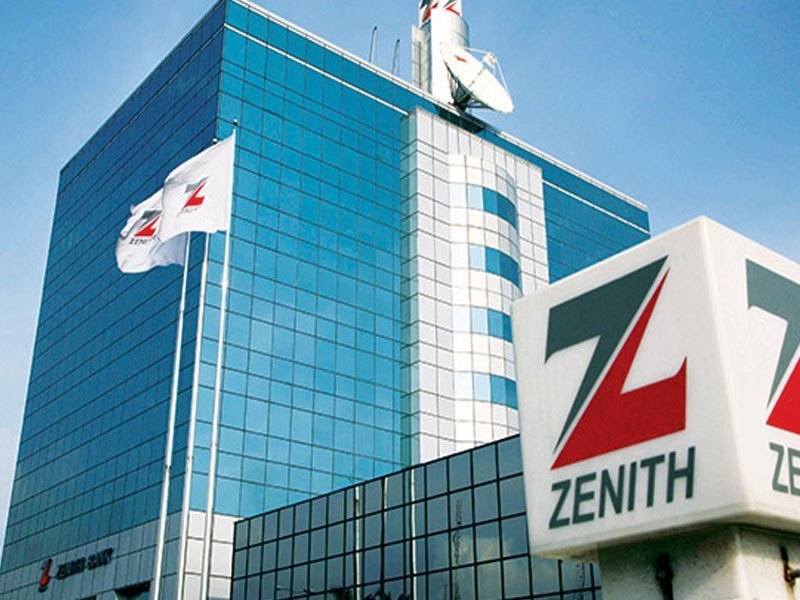
Zenith Bank remained Nigeria’s most profitable lender in the first quarter of 2026, with pretax profit of ₦360.91 billion, followed by FirstHoldCo Plc at ₦321.1 billion and Guaranty Trust Holding Company (GTCO) at ₦302.89 billion.
The results highlight a clear shift in performance across the sector. While heavyweights like Zenith Bank and FirstHoldCo maintained their positions at the top of the absolute profit table, mid-tier lenders and diversified holding companies led by Wema Bank and Stanbic IBTC, stole the spotlight in terms of year-on-year growth momentum.
The quarter-on-quarter dynamics reveal two distinct trends: the stabilization of traditional trading-reliant giants and the aggressive core earnings expansion of retail-focused lenders.
The ranking shows a sector still generating strong earnings, but with profit growth increasingly uneven across the major banks. While some lenders delivered sharp gains, others saw momentum slow or reverse after a year of strong rate-driven earnings.
Wema’s Retail Sweep (+76%): Wema Bank led the industry in profit growth, powered by the digital-first scale of its ALAT ecosystem. This platform allowed the bank to bypass the deposit stagnation plaguing traditional tier-1 peers, collecting cheap transactional retail float to deploy into high-yielding short-term credit.
FirstHoldCo’s Real Sector Focus (+72%): Moving to second place on the absolute profit table, FirstHoldCo benefited directly from a 5.26% expansion in its loan book (reaching ₦9.43 trillion) alongside an aggressive reallocation of capital toward high-yield corporate segments.
Next in line came, Sterling at 52.3%, Stanbic IBTC at 42% and Access Holdings at 22%. Zenith grew 2.9%, GTCO 0.9%, while UBA fell -21.35%.
The dispersion suggests that capital strength alone is no longer enough to guarantee outsized earnings. Banks with stronger loan growth, fee generation and funding discipline are pulling ahead, while those more exposed to margin compression or slower trading income are losing pace.
Zenith Bank (₦360.9bn): Zenith defended its title as Nigeria’s most profitable lender. Growth was more moderate at 2.88%. However, its 13.25% loan book rotation into the private sector protected its margins against falling treasury yields.
The Valuation Drag: UBA was the only tier-1 lender to report a decline in earnings for the quarter. This performance reflects a drop in foreign exchange trading windfalls following currency normalization, combined with high operational overhead across its 20-country pan-African subsidiaries.
These earnings results land at an important time for the local bourse, especially as the market prepares for FTSE Russell’s reclassification of Nigeria to Frontier Market status, as well as the Dangote Refinery IPO by September 2026.
Valuation Multiples: Given Chapel Hill Denham’s recent analysis showing that banks like Access and UBA are trading at deep discounts (0.36x to 0.45x Price-to-Book), these robust Q1 numbers make the banking index look increasingly attractive to incoming global index-tracker funds.
Competition Heightens: The Q1 numbers also suggest that the earnings cycle is becoming more selective as banks adjust to lower rates, changing liquidity conditions and a more competitive deposit market. That makes execution, asset mix and balance-sheet efficiency more important than broad sector tailwinds.
For investors, the ranking reinforces a familiar pattern: Zenith and FirstHoldCo remain at the top of the profit table, but the real story is how quickly smaller or faster-moving banks are catching up to the large tier-one names.