


By Kalu Okoronkwo
“The greatest use of a life is to spend it on something that will outlast it.” — William James
In the wild, every lion must one day leave the territory it once ruled. Yet great lions are never remembered for the moment they depart. They are remembered for the order they established, the pride they protected, and the enduring strength of the kingdom they leave behind. Leadership follows the same immutable law. The finest leaders are measured not by the power they wield, but by the institutions they strengthen, the successors they prepare, and the legacies that continue to inspire long after they have stepped aside.
The retirement of Tony Onyemaechi Elumelu, CFR, as Chairman of the Board of United Bank for Africa (UBA) Plc after 12 years in the role exemplifies this timeless truth. It marks the closure of an extraordinary chapter in African banking, not because an illustrious career has ended, but because one of the continent’s most consequential leadership journeys has reached a defining milestone. Elumelu’s departure from the UBA Board, in compliance with the Central Bank of Nigeria’s corporate governance guidelines concludes a remarkable era of stewardship while opening another chapter in a life devoted to building enduring African institutions.
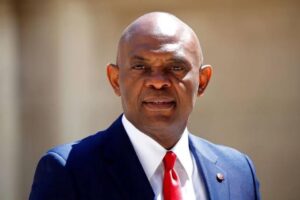
This is not the story of a man retiring from relevance, nor is it the final curtain on his influence. Rather, it is the story of a banker who became an institution builder, an entrepreneur who redefined leadership beyond the balance sheet, and an African visionary whose ambition extended far beyond national borders to embrace the economic destiny of an entire continent.
At its meeting on July 6, 2026, the UBA Board accepted Elumelu’s retirement and appointed Mr. Emmanuel Nnorom, a Non-Executive Director and former Executive Director (Finance), as his successor, effective August 21, 2026.
In announcing the transition, the Board expressed profound appreciation for Elumelu’s visionary leadership and exceptional contribution to the strategic direction and institutional growth of the UBA Group. According to the Bank, “Mr. Elumelu’s tenure has been a defining chapter in the Group’s history. Under his stewardship, UBA was transformed into a truly pan-African institution, operating in 20 African countries and four global financial centres while serving more than 50 million customers.”
Reflecting on his departure, Elumelu remarked: “Serving United Bank for Africa has been one of the greatest privileges of my career. UBA has established a unique competitive position across Africa and globally, and I leave the Board with absolute confidence in the Bank’s future. Emmanuel Nnorom is a leader of integrity, experience, and sound judgement, and I am confident that UBA will continue to thrive under his leadership.”
Great institutions are rarely built by accident. They are forged by men and women with the rare ability to see possibilities where others see only limitations. Tony Elumelu belongs to that uncommon class of leaders whose greatest accomplishment was never simply the creation of wealth, but the creation of institutions capable of outliving their architects.
His journey did not begin in an imposing boardroom or behind the polished doors of a multinational bank. Like many remarkable careers, it began with modest ambitions, relentless determination, and a firm belief in the transformative power of enterprise.
Elumelu has often recalled that his professional life began as a salesman, selling photocopiers, a formative experience that taught him resilience, discipline, persistence, and the importance of earning trust on one customer at a time. Reflecting on those early years, he once observed: “I started my career as a salesman, a copier salesman, to be specific; young, hungry, and hardworking.”
That experience shaped a conviction that would define his career: leadership begins with service, perseverance, and the courage to embrace difficult opportunities.
His transition into banking exposed him to an industry undergoing profound change. At Allstates Trust Bank, he acquired invaluable experience in banking operations, customer relationship management, risk management, and financial services. More importantly, he developed a reputation as an ambitious professional who believed banking should be far more than the business of taking deposits and granting loans. In his view, finance should serve as a catalyst for enterprise, economic growth, and national development.
In 1997, when many investors shied away from distressed financial institutions, Elumelu led a group of young investors to acquire the struggling Crystal Bank. The decision was widely regarded as audacious, if not reckless. Yet he saw what many others failed to see: the possibility of transforming institutional weakness into enduring strength.
The bank was subsequently rebranded as Standard Trust Bank (STB). Under his leadership, it evolved within a few years into one of Nigeria’s fastest growing financial institutions, earning a reputation for innovation, operational discipline, and exceptional execution.
Years later, reflecting on that bold decision, Elumelu recalled that some critics dismissed him as “a joker” for attempting what many considered impossible. His response has since become one of the defining expressions of his leadership philosophy: “When you do extraordinary things, people think you’re stupid.”
Standard Trust Bank was never intended to become just another commercial bank. It became a laboratory for innovation, disciplined execution, and bold ambition. Young professionals were empowered, technology was embraced and bureaucratic complacency gave way to a culture of performance. In the process, long held assumptions about what a Nigerian bank could become were fundamentally challenged.
Elumelu would later describe STB as an institution where shared vision and relentless execution redefined banking in Nigeria, laying the foundation for even greater ambitions.
Those ambitions found their most significant expression in 2005, when, amid the sweeping banking consolidation reforms initiated by the Central Bank of Nigeria, Standard Trust Bank executed what remains one of the most transformative transactions in the history of Sub-Saharan African banking: its merger with the old United Bank for Africa. Later that same year, Continental Trust Bank was integrated into the enlarged institution, further strengthening its market position and accelerating its emergence as a continental banking powerhouse.
To many observers, the transaction represented far more than a merger of balance sheets. It combined the heritage, brand equity, and nationwide reach of the old UBA with the entrepreneurial energy, technological orientation, and execution culture of Standard Trust Bank. It marked a generational shift in Nigerian banking and demonstrated that strategic vision could triumph over institutional inertia.
As Group Managing Director and Chief Executive Officer of the newly combined institution, Elumelu inherited far more than a larger bank. He inherited the daunting responsibility of integrating systems, cultures, people, and expectations while steering the organisation through one of the most competitive periods in Nigeria’s financial history.
He did more than integrate banks: He transformed an institution, what emerged was no longer merely United Bank for Africa. It became Africa’s Global Bank financial institution with operations in 20 African countries and four international financial centres, serving more than 50 million customers and connecting African businesses to global opportunities.
Under his stewardship, first as Group Managing Director and Chief Executive Officer and later as Chairman of the Board, UBA evolved from a predominantly domestic institution into one of Africa’s most recognisable and respected banking brands.
Elumelu’s most enduring contribution to African banking may well be that he changed the continent’s financial imagination. Before his emergence, many African banks were largely perceived as domestic institutions, constrained by geography, modest ambition and limited international relevance. The prevailing assumption was that truly global banking could only be built from financial capitals outside Africa.
Long before the African Continental Free Trade Area (AfCFTA) became a reality, he envisioned a financial institution that would serve as a bridge between African economies, facilitating cross-border trade, mobilising indigenous capital and demonstrating that an African owned bank could compete confidently on the global stage. That vision demanded more than ambition. It required the painstaking integration of institutions, people and cultures.
Corporate mergers often fail, not because the numbers do not add up, but because people do not. Systems resist integration, cultures collide and leadership philosophies compete for dominance. Navigating those realities required strategic discipline as much as financial expertise. Under Elumelu’s leadership, the merged institutions gradually evolved into what is now recognised as one of Africa’s leading financial groups, with operations spanning 20 African countries and a presence in major international financial hubs.
In 2011, Elumelu articulated a philosophy that has since become part of Africa’s economic lexicon: Africapitalism. At its core was a simple proposition, that Africa’s private sector should become the principal engine of the continent’s economic transformation through long term investment, entrepreneurship, responsible business practices and value creation.
For generations, conversations about Africa’s development had revolved around foreign aid, debt relief and external intervention. Elumelu reframed the debate. He argued that the continent’s future would ultimately be determined not by the generosity of outsiders but by the ingenuity of Africans themselves. His conviction was unequivocal: Africa would not be transformed by charity alone; it would be transformed by entrepreneurs.
Unlike many business philosophies that remain confined to conference podiums and academic journals, Africapitalism was translated into practical action.
Elumelu established the Tony Elumelu Foundation and committed US$100 million to identify, mentor, train and fund 10,000 African entrepreneurs over a decade. The initiative has since expanded to 54 African countries, supporting thousands of emerging businesses and becoming one of the largest privately funded entrepreneurship programmes on the continent.
The significance of that investment extends beyond philanthropy. Traditional philanthropy redistributes existing wealth; Elumelu’s model seeks to create new wealth by empowering others to become entrepreneurs, employers and investors. It reflects his long-held belief that entrepreneurship is not merely a commercial pursuit but a powerful instrument of economic development, job creation and social mobility.
Today, Africapitalism is studied in universities, debated in business schools and examined by development institutions and global economic forums as a distinctly African framework for inclusive growth. While it shares elements with concepts such as shared value, conscious capitalism and impact investing, its central premise remains uniquely African: that the continent’s prosperity must ultimately be financed, driven and sustained by Africans.
That philosophy also explains why Elumelu’s departure from UBA should not be mistaken for a retreat from public life. Every enduring institution eventually reaches the point where stewardship must pass from one generation to another. Such moments are not evidence of decline; they are proof that an institution has matured beyond dependence on a single individual. Leadership, at its highest level, is measured not by how indispensable one becomes but by how effectively one prepares others to continue the journey.
Too often, particularly within emerging economies, institutions become inseparable from the personalities who lead them. Succession is then greeted with uncertainty because systems have never been allowed to outgrow individuals. UBA’s orderly leadership transition offers a different narrative. It reflects years of deliberate governance, continuity planning and institutional discipline, qualities that ensure stability beyond the tenure of any one chairman.
Seen from that perspective, Elumelu is retiring from an office, not from influence. His responsibilities may be changing, but his mission remains firmly intact. Through Heirs Holdings, he continues to shape investments across energy, financial services, healthcare, hospitality, technology and real estate. Through Transcorp Group, he remains an influential figure in Nigeria’s corporate landscape. Through the Tony Elumelu Foundation, he continues to invest in the next generation of African entrepreneurs, extending his impact far beyond boardrooms and annual reports.
That is why this moment should be understood not as the closing chapter of a remarkable career but as the evolution of an extraordinary legacy. The boardroom he leaves behind is stronger than the one he inherited. The institution he helped build is larger than the office he occupied. And the ideas he championed have travelled farther than any balance sheet could ever measure.
Great bankers create wealth. Exceptional bankers build institutions. The rarest among them redefine what an entire continent believes is possible.
Tony Elumelu belongs firmly in that last category.
Kalu Okoronkwo is a communications strategist, a leadership and good governance advocate dedicated to impactful societal development and can be reached via kalu.okoronkwo@gmail.com