
By Kalu Okoronkwo
There was a time when Kenneth Okonkwo, popularly known for his role as Andy Okeke in the iconic Nollywood movie Living in Bondage, appeared destined for political relevance. Having starred in a film that became a cultural phenomenon and helped launch Nigeria’s movie industry into global prominence, he possessed what many aspiring politicians spend decades trying to acquire: national recognition, communication skills, legal training, and a readymade public audience.
His transition from Nollywood fame to political advocacy positioned him as one of the most visible voices in Nigeria’s emerging opposition movement. Yet, politics is often a theatre of strange transformations. Heroes become villains, loyalists become critics, and defenders become accusers. In the turbulent arena of Nigerian politics, few transformations have been as dramatic and perplexing as that of Kenneth Okonkwo.
Today, the actor turned politician finds himself at the centre of controversy, not because of any electoral victory or groundbreaking policy contribution, but because of his increasingly bitter and often unsubstantiated criticisms of former Labour Party presidential candidate and current Nigerian Democratic Congress (NDC) presidential candidate, Mr. Peter Obi.
During the rise of the Labour Party in the 2023 elections, Okonkwo was a devoted spokesman for the Labour Party Presidential Campaign Council. In this role, he invested enormous energy defending Obi against critics and projecting him as the symbol of a new political culture. He passionately promoted the vision of a “New Nigeria” and challenged the political establishment while inspiring many supporters with his eloquence, confidence, and conviction. Throughout the campaign, he presented Obi as a competent, credible, and transformational leader capable of rescuing Nigeria from decades of political stagnation.
However, Okonkwo has metamorphosed to a turncoat, leveraging every available media platform to defame and de-market the man he once projected as a messiah to save Nigeria from plunging to economic demise. He is reportedly facing potential defamation suit with claims of up to ₦10 billion over allegations he made against Peter Obi and some members of the NDC, South-East Caucus.
There is perhaps no greater burden in public life than the burden of inconsistency. A politician may survive defeat. He may recover from controversy. He may even rebound from public ridicule. But when he becomes trapped in a web of contradictions of his own making, every statement he makes begins to compete with his own history. That appears to be the predicament Kenneth Okonkwo faces today.
Once celebrated as one of the brightest voices of the Obedient Movement and one of the most articulate defenders of Peter Obi, Okonkwo has undergone a remarkable political transformation. The man who once marketed Obi as a symbol of integrity, prudence, competence, and transformational leadership has now emerged as one of his fiercest critics.
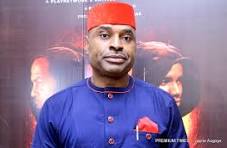
The question confronting Nigerians is simple: which Kenneth Okonkwo should they believe? The Kenneth Okonkwo who passionately vouched for Peter Obi’s character and leadership before millions of Nigerians, or the Kenneth Okonkwo who now questions the very qualities he once praised? The answer may ultimately determine not only his credibility but his political future.
When Kenneth Okonkwo ventured into partisan politics, many expected that his communication skills, legal background, and celebrity status would translate into political influence. On paper, he possessed all the ingredients for success. But politics is not a movie scene. In movies, conviction is performed. In politics, conviction is tested. It is in that test that many observers believe Kenneth Okonkwo has struggled.
One of the recurring criticisms of his political journey is the frequency with which he has moved between political camps. His trajectory has taken him through multiple parties and alliances, with each transition accompanied by enthusiastic endorsements of his new political platform and equally vigorous criticisms of the previous one. This pattern has created a significant perception problem.
Okonkwo joined the People’s Democratic Party (PDP) in 2014 when President Goodluck Jonathan sought re-election. Following Jonathan’s defeat in 2015, he moved to the All Progressives Congress (APC). By 2019, he had become a vocal supporter of President Muhammadu Buhari’s re-election campaign despite widespread economic hardship and growing public dissatisfaction.
When Buhari secured victory and no significant political role materialised for him, Okonkwo eventually moved on again. He joined the Labour Party and assumed the role of spokesperson during Peter Obi’s presidential campaign. He marketed Obi with the same passion, conviction, and intensity that he now deploys in criticising him.
Anyone who watches his old interviews and campaign appearances would find it difficult to reconcile them with his current position. The enthusiasm was unmistakable. The confidence was unwavering. Yet after the Labour Party project failed to secure victory at the polls, Okonkwo moved again. Today, he has aligned himself with the African Democratic Congress (ADC), supporting former Vice President Atiku Abubakar and the coalition movement.
When a politician repeatedly changes political platforms, supporters and opponents alike inevitably begin to question whether principle or opportunity is the primary motivation. Fairly or unfairly, that question now follows Kenneth Okonkwo wherever he goes.
Political realignment is not a crime. However, credibility becomes strained when yesterday’s political hero suddenly becomes today’s political villain. The public naturally becomes skeptical.
Nowhere is this contradiction more evident than in Okonkwo’s relationship with Peter Obi.
During the 2023 election campaign, he was not merely a supporter of Obi; he was one of his most passionate advocates. He promoted and defended him across media platforms and sold his vision with extraordinary conviction. Listening to some of those interviews today, one would struggle to reconcile them with his present rhetoric.
At that time, Obi was portrayed as disciplined, prudent, competent, transparent, and trustworthy. Today, Okonkwo is singing a new song. The transformation has left many Nigerians bemused.
The South East Revival Group (SERG) captured this dilemma when it questioned which version of Kenneth Okonkwo Nigerians should believe: the man who once vouched for Obi’s leadership qualities or the man who now seeks to discredit them? The Group’s argument is difficult to dismiss. Either the earlier endorsement was mistaken, or the current criticism is contrived. Both cannot be true simultaneously. That is the contradiction from which Okonkwo has struggled to escape.
Adding another layer to the controversy are allegations made by political commentator, Dr. Katch Ononuju.
According to Dr. Ononuju, the breakdown in the relationship between Okonkwo and the Obedient Movement may have been influenced allegedly by disagreements relating to accommodation support and financial expectations from Okonkwo. Nevertheless, they have generated significant public debate and fueled speculation about the motives behind Okonkwo’s sudden rebellion.
In politics, perception often travels faster than proof. Once a narrative gains traction, controlling it becomes increasingly difficult.
Constructive criticism is essential in any democracy. No politician should be immune from scrutiny. However, there comes a time when criticism ceases to appear principled and begins to look personal. Many observers believe Kenneth Okonkwo has crossed that line.
His recent media appearances have increasingly centred on attacks against former allies. Rather than presenting alternative policy ideas or articulating a fresh political vision, Okonkwo appears locked in a perpetual battle against people he once supported.
The result is unfortunate. Instead of discussing what he stands for, public attention is increasingly pre-occupied by who he is attacking.
Grandstanding attracts headlines but weakens statesmanship. It generates controversy without necessarily earning respect. It creates noise while diminishing influence.
The controversy has now escalated beyond politics. Reports of a proposed ₦10 billion defamation suit arising from allegations made against Peter Obi and other political figures have introduced a legal dimension that could significantly affect Okonkwo’s public image.
Courts exist to examine evidence and separate fact from allegation. Should legal proceedings proceed, they will provide an opportunity for competing claims to be tested. Regardless of the eventual outcome, the political consequences are already apparent.
A politician embroiled in endless disputes risks becoming known more for controversy than contribution. That is rarely a formula for long term political success.
The irony of Kenneth Okonkwo’s unraveling is that he still possesses many of the qualities that once made him a compelling public figure. He remains articulate, intelligent, and capable of influencing public discourse. These qualities if better deployed would have positioned Okonkwo on a more honourable pedestrian in Nigeria’s political ecosystem. But instead, he chose a path to infamy.
Political relevance (read nuisance), built on perpetual confrontation is difficult to sustain. Eventually, audiences grow weary of endless battles. They begin to seek builders rather than critics, visionaries rather than combatants, and statesmen rather than performers. This is the crossroads at which Okonkwo now stands.
He can continue down the path of perpetual outrage, becoming a fixture of political controversy but a footnote in political history. Or he can rediscover the discipline, focus, and constructive engagement necessary to transform visibility into genuine leadership.
History is generally kinder to those who build than to those who merely complain. Kenneth Okonkwo appears increasingly trapped in a prison of his own making, with many observers who had followed his movie career believing that decades after he starred in award winning movie, Living in Bondage, that he is indeed still living in bondage.
Perhaps the most painful aspect of his story is that it did not have to end this way. He entered politics with goodwill, name recognition, communication skills, and access to national platforms. Few politicians begin with such advantages.
Rather than consolidating those strengths into a stable political identity, he appears increasingly trapped in cycles of confrontation, reinvention, and controversy. What many Nigerians see today is not merely a politician changing positions; they see a public figure struggling to reconcile his present rhetoric with his past declarations.
History is often kinder to those who remain consistent in conviction than to those who constantly reinvent themselves according to political circumstances. Kenneth Okonkwo may yet rebuild his crumbling political edifice but only if he comes to the self-awareness like the biblical prodigal son and retrace his steps, not to Peter Obi or the NDC, but to himself. This should be the point of salvaging whatever is left of his image. Until then, every new statement he makes will inevitably be measured against his old ones.
For now, the image confronting the public is not that of a statesman rising above political turbulence. Rather, it is that of a political jester trapped in his own contradictions. Only Okonkwo can extricate himself from this odium.
Kalu Okoronkwo is a communications strategist, a leadership and good governance advocate dedicated to impactful societal development and can be reached via kalu.okoronkwo@gmail.com