

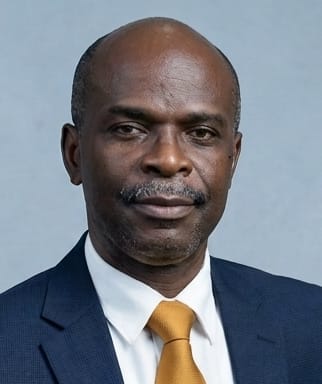
By Nkem Jacobs
Some South-East governors, notably Charles Soludo, Peter Mbah and Francis Nwifuru, alongside ministers and other political officeholders, have been busy promising to deliver their constituencies to President Bola Ahmed Tinubu. In their political timetable, it is not yet the turn of an Igbo person to become president. When that turn might arrive remains classified, possibly filed under “To Be Opened After Further Notice.”
The latest entrant into this political theatre is Dr Doris Uzoka-Anite, Minister of State for Budget and Economic Planning. Following a town hall meeting between President Tinubu and Igbo stakeholders in Lagos on November 23, 2026, the minister expressed confidence that Tinubu would receive significantly more Igbo votes in Lagos in 2027 than he did in 2023.
Speaking on Arise Television the following day, she declared that “Lagos state has given us a home.” She also credited sustained dialogue with the authorities for what she described as an end to the demolition of Igbo-owned properties since the previous year. Dialogue is certainly desirable. Peaceful coexistence is indispensable. But the minister’s intervention raises questions that go beyond campaign rhetoric.
When businesses and homes belonging to Igbo citizens were being demolished, what representations were made on their behalf? When local authorities changed street names previously bearing Igbo identities and controversy erupted over the renaming of landmarks such as Charly Boy Bus Stop, where were the assurances of inclusion now being offered in the approach to another election?
The government has defended various demolition exercises on regulatory and planning grounds, while critics have questioned their timing, implementation and perceived ethnic implications. These concerns deserve transparent answers rather than electoral assurances.
More fundamentally, did Lagos give the Igbo a home, or did Nigerian citizens exercise their constitutional right to settle, acquire property and conduct legitimate business in another part of their country? Why can’t the those planning and executing the demolitions go to the South East and build things too?
Lagos provided opportunities, and generations of Igbo entrepreneurs, professionals and workers contributed to its economic development. The relationship has been mutually beneficial. It is not a charitable arrangement, and citizenship is not a favour by the Yoruba for which repayment becomes due every four years. A Nigerian does not become a political debtor by purchasing a house in Lagos, opening a shop in Kano or establishing a factory in Aba. Constitutional rights do not come with party membership cards.
The confidence with which some political officeholders promise to deliver entire populations recalls an older experiment in delivering Igboland from above through the British warrant chief system. The British colonial administrators must have suffered considerable headaches governing Igboland. In the North, they found emirs; in the West, monarchies. In much of the East, they encountered a political inconvenience in a people who insisted on having opinions. Authority was dispersed among elders, lineage heads, age grades and women’s associations. The British wanted chiefs; the people preferred consultations. Frustrated, the colonial authorities appointed warrant chiefs, many lacking traditional legitimacy. It soon became clear that London could print appointment letters, but not respect.
The contradictions exploded in 1929 when women organised against warrant chief abuses and fears of taxation. The Women’s War, misleadingly called the Aba Women’s Riot, taught the British an unforgettable lesson, that authority can be imposed, but allegiance cannot be commanded. The colonial authorities thought they had a problem collecting revenue; the women showed them a bigger problem collecting consent.
Today’s governors and ministers are not colonial warrant chiefs. Their offices derive legitimacy from constitutional processes. The analogy concerns something more enduring, which is the mistaken assumption that occupying public office confers a controlling shareholding in the people’s political judgment.
In much of Igboland, political authority has frequently encountered a stubborn question, “Who sent you?” If the answer is unsatisfactory, the follow-up is even less comfortable, “Who authorised you to speak for us?” The republican tradition in Igboland does not imply a rejection of leadership. Rather, it emphasises individual agency, community deliberation, achievement and the accountability of those exercising authority. Influence must be earned; it cannot simply be announced at a press conference.
Those who refuse to consult history often end up swallowing the embarrassment that comes from repeating it. A curious accusation holds that Igbo voters choose purely by ethnicity. The electoral record tells a considerably more complicated story.
In 1993, Bashir Tofa had an Igbo running mate, Sylvester Ugoh. Yet, according to the election results subsequently made public, MKO Abiola, a Yoruba Muslim, won Anambra with approximately 57 per cent and secured roughly 48 per cent of the votes across the four South-East states of the time.
In 1999, Olusegun Obasanjo received 70.21 per cent of the valid votes across the five South-East states. In 2003, he secured 69.47 per cent, while Chukwuemeka Odumegwu Ojukwu, arguably the most recognisable personality in Igbo political history, received only 22.39 per cent in the same states.
These figures are awkward guests at the dinner table of those who insist that an Igbo candidate automatically inherits Igbo votes. Goodluck Jonathan, an Ijaw politician, enjoyed overwhelming support in the region in 2011 and 2015. In 2015, he secured 90.63 per cent of valid votes across the five states, against Muhammadu Buhari’s 7.29 per cent.
In 2023, Peter Obi received approximately 87.80 per cent of valid votes in the South-East, against Tinubu’s 5.71 per cent. Obi won all five states, including Ebonyi and Imo, whose governors belonged to Tinubu’s All Progressives Congress. The ballot box evidently did not receive instructions from Government House.
None of this establishes that Igbo voters are immune to ethnic sentiment. No community enjoys such immunity. But the historical record substantially challenges the simplistic portrayal of the Igbo electorate as one driven exclusively by tribal considerations. A more plausible interpretation is that voters can develop strong convictions about particular candidates and sustain those convictions despite competing political pressures.
A recent episode illustrates the limitations of organised mobilisation. At the Item Okpi cultural festival in Abia State, Deputy Speaker of the House of Representatives Benjamin Kalu urged the audience to support Tinubu’s re-election. Sections of the crowd repeatedly chanted Obi’s name. A woman reportedly took the microphone and led the chants. Kalu’s rendition of “On Your Mandate We Shall Stand” only made the competing chants louder. He reportedly remarked that those chanting were not Item people. The organisers had the venue, the microphones and the dignitaries. Unfortunately, the audience arrived with its own opinion, a detail apparently omitted from the event budget.
Of course, one festival crowd cannot predict a national election. Neither can a gathering of business leaders in Lagos. Political endorsements are not opinion polls, and applause is not an electoral result. Uzoka-Anite herself acknowledged that the Igbo community is not politically homogeneous and that no single organisation can speak for everyone. That admission is perhaps the most instructive part of her recent intervention.
Governors and ministers seeking support for their preferred candidate have a legitimate responsibility to persuade. They must explain achievements, address economic hardship, respond to grievances and demonstrate why their candidate deserves consideration. Political persuasion must not be confused with political entitlement. Nor should the protection of people’s livelihoods be presented as a concession contingent upon electoral loyalty.
The tragedy of the warrant chiefs was not merely their lack of legitimacy. It was that the colonial administration misunderstood the people it governed, assuming that authority imposed from above would produce obedience below.
Contemporary politicians would do well to remember that lesson. The stubborn Igbo thumb is a metaphor for electoral independence, not an endorsement of ethnic supremacy or permanent loyalty to any candidate. It represents the right of citizens to make choices without intimidation, inducement or instruction from political officeholders.
The decisive moment comes when the voter stands alone before the ballot paper. The governor is absent. The minister is absent. The market association chairman is absent. The master of ceremonies is absent. The ballot paper does not recognise protocol lists.
Politicians may command convoys, appointees, campaign budgets and microphones. But the voter retains one instrument they cannot lawfully commandeer, which is the thumb. On election day, that thumb does not salute convoys, read press releases or answer to “Your Excellency” or “Honourable Minister.” It answers to its owner.
A warrant can create a chief. An election can create a governor. A presidential appointment can create a minister. But none can create unquestioning followers.
Nkem Jacobs, a Strategic Communications Specialist and Public Affairs Analyst, writes from inscriptiveM@outlook.com.