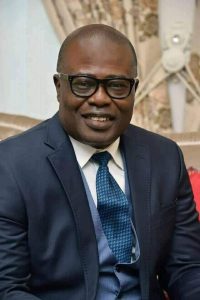

As the world marks the World Day Against Human Trafficking, Mabel Adinya – the Executive Director, Adinya Arise Foundation, Abuja, a non-governmental organisation has drawn the attention of Nigerian government and the global community to the debilitating crisis of human trafficking and modern day slavery in Nigeria. According to the director, “we are once again reminded of the deeply troubling and worsening crisis of human trafficking and modern-day slavery in Nigeria as what was once unthinkable is now becoming commonplace.”
She noted that children are being stolen and sold, women and girls are trafficked for sex slavery and forced labour within and outside the country, baby factories have been established to sustain illegal sale of children and to imprison young women, and most horrifically, lives are being destroyed for organ harvesting.
The methods used by traffickers to hoodwink their victims have become more deceptive and sophisticated. They come in forms of fat lies and fabrications cloaked in fake promises of education, employment, and care. The perpetrators exploit poverty, ignorance, displacement and insecurity of their victims to ply this evil trade while laws and preventive mechanisms remain either absent or weakly enforced.
This is a national emergency and we call on all stakeholders to join the fight against this hydra-geaded societal menace.
In our collective silence, the traffickers thrive and are emboldened to cause more harm. But there is hope. Through relentless advocacy under the USAID Palladium SCALE Counter Trafficking in Persons (CTIP) Project, the Adinya Arise Foundation (AAF) and its Cluster members: ECJP, NUJ Taraba, GERI, OSA Foundation, and JDPC Ibadan have continued to sustain the momentum to end the scourge.
Today, our concerted effort has continued to yield positive outcomes. First, Taraba states has passed the Prohibition Against Human Trafficking Bill into law while that of Benue state has passed the through second reading. We are not resting on our oars as the movement continues across Nigeria.
She called on the Federal and State Ministries of Women Affairs and Social Development to scale up prevention, rescue, rehabilitation, and reintegration frameworks.
While pointing ways forward to contain the scourge, Adinya recommended that; National Agency for Prohibition of Trafficking in Persons (NAPTIP) should be adequately funded and politically supported to expand its reach and strengthen coordination across states. The Ministry of Justice, at federal and state levels, should as well push for stronger legislation, prosecution of offenders, and implementation of victim-centered justice systems.
Additionally, law enforcement agencies, immigration, judiciary, health and social workers need capacity-building and trauma-informed tools to handle victims compassionately and effectively. Moreover, she posited that a well-functioning inter-agency referral network must be established and monitored.
Above all, Nigeria according to the executive director “needs a comprehensive legal and institutional framework to break the chain of human trafficking and protect the dignity and rights of every citizen.”