
By Hon. Cletus Nwankwo
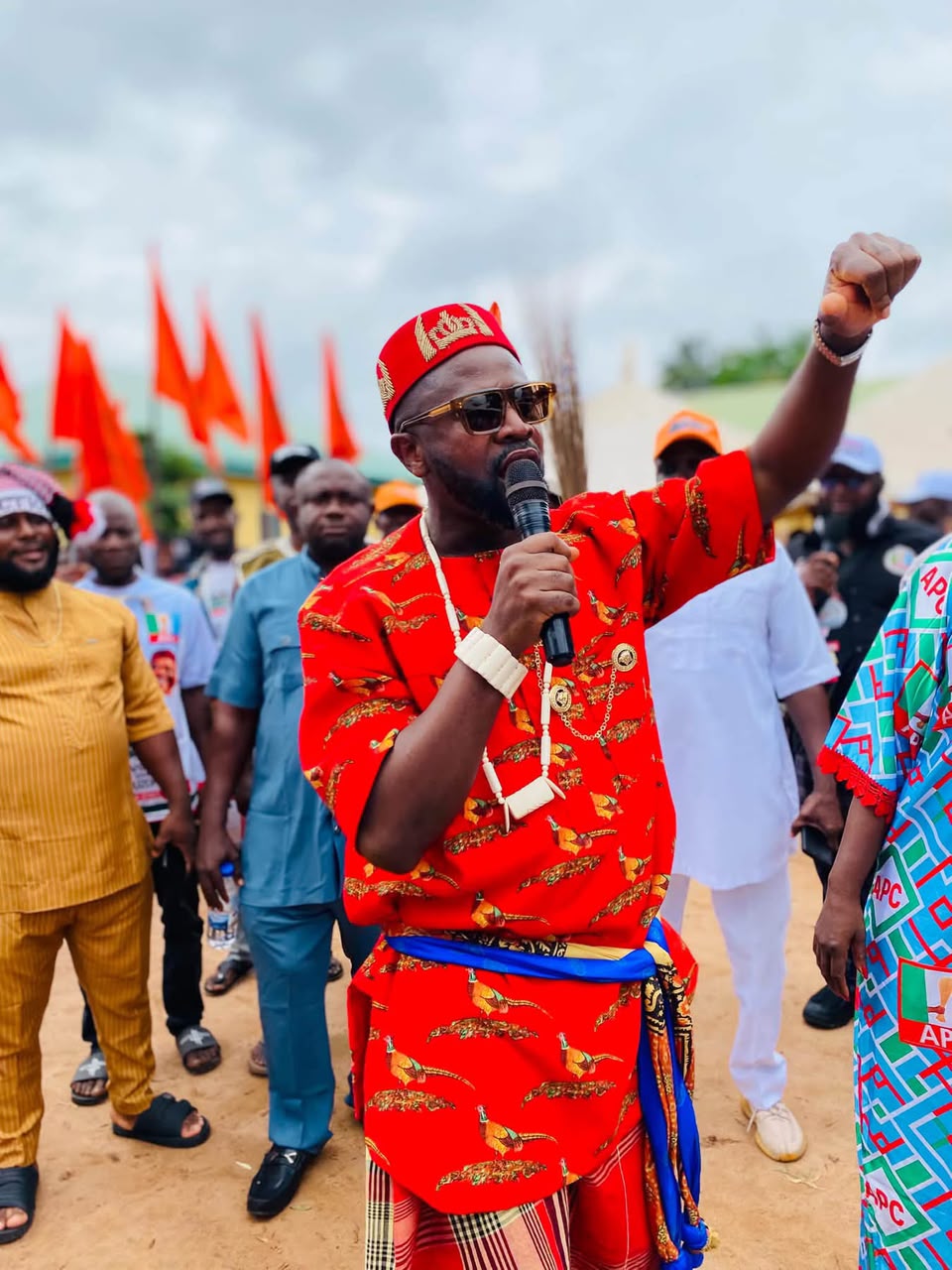
There are moments in the political history of a people when an election becomes larger than the contest for a seat. It becomes an opportunity to ask a more fundamental question: what should representation mean to the people being represented? For Arochukwu/Ohafia Federal Constituency, that question may get particular significance as the 2027 National Assembly elections approach.Arochukwu/Ohafia is one of Abia State’s eight federal constituencies in the House of Representatives, comprising the entire geographical areas of Arochukwu and Ohafia Local Government Areas. Since the return to democratic rule in 1999, the constituency has produced a succession of representatives, beginning with Mao Arukwe Ohuabunwa, who represented the constituency in the Fourth and Fifth National Assemblies.Over time, an informal political understanding around rotation and local balancing has become part of the conversation surrounding the constituency. Yet rotation, however politically convenient, cannot by itself answer the larger question of what constitutes effective representation and that is where 2027 becomes interesting. The central question should perhaps not be simply whose turn is it? It should be: what does Arochukwu/Ohafia require from the person who will speak for it in the Green Chamber during the next legislative cycle? Democracy inevitably produces competition for public office. But representation should not be understood merely as a reward for political loyalty, geographical origin or the strength of an electoral structure. A federal legislator operates within a constitutional framework involving lawmaking, oversight, representation and constituency advocacy. Consequently, the quality of representation can reasonably be examined through questions of competence, accessibility, legislative capacity, accountability, development advocacy and the ability to translate constituency concerns into issues of national policy.It is against that wider framework that the emergence of Ikenna Nicholas Ukwa deserves attention. Ukwa brings a professional background that cuts across the private sector, media and legislative duties. He is the CEO/Founder of Reigh Advertising & Consulting and Co-Founder of East Point Media & Consult Ltd. His professional experience in communications, media and business provides a profile that is different from the conventional trajectory through which many politicians enter public life.But professional credentials, by themselves, do not settle the question of legislative effectiveness. The more important issue is how such experience would translate into public representation. That is ultimately a question the electorate must determine through evidence. One of the more interesting elements of the political conversation surrounding Ukwa is the claim that his engagement with communities in Arochukwu/Ohafia predates the current election cycle. Supporters point to reported interventions including solar-powered street lighting, improvements in public-school infrastructure, youth engagement through sports and other forms of human-capital intervention.If independently verified, such interventions raise an important question about the relationship between pre-election community engagement and formal political representation. Traditionally, constituency politics can become most visible around election periods. The appearance of a prospective candidate, therefore, raises a broader issue: should meaningful political engagement begin only after nomination, or should citizens expect prospective representatives to demonstrate a record of community engagement before asking for public office? The answer has implications beyond one candidate. It potentially changes the culture of political accountability from promises made before elections to evidence examined before elections.Arochukwu/Ohafia possesses an economic geography that invites a more ambitious political conversation. The constituency’s development cannot be separated from questions of transportation, industrialisation, natural resources, agriculture, education, youth employment and regional connectivity.The broader Calabar-Abuja Trans-Sahara Super Highway is now an active federal infrastructure project. The Federal Ministry of Works says the corridor is intended to improve connectivity and unlock economic opportunities, while the Federal Ministry of Information has reported ongoing work on sections of the route connecting Cross River, Ebonyi and the northern corridor.For Arochukwu/Ohafia, the significance of such infrastructure goes beyond the road itself. A functioning transport corridor can alter the economics of distance. It can affect movement of agricultural products, access to markets, tourism, investment decisions, logistics and the viability of industrial activity. This is where legislative representation requires something more than ceremonial visibility.A representative who understands the constituency’s economic assets must be able to articulate those assets within broader federal development policies. The conversation around limestone deposits, industrial development and access to regional markets therefore deserves serious empirical examination. Rather than treating natural resources as political slogans, the 2027 debate could ask harder questions: What resources are available? What prevents their development? What infrastructure is required? Which federal agencies have jurisdiction? What legislative or policy interventions are possible? And how can communities participate in the economic value created? Those are questions capable of moving constituency politics from rhetoric to development planning.Arochukwu/Ohafia is not a constituency without a history of accomplished individuals. Its intellectual and professional heritage includes figures such as Professor Eni Njoku, Dr Alvan Ikoku, Chief Kalu Idika Kalu and others whose contributions extend beyond the immediate geography of the constituency. That history creates an interesting standard.The challenge before contemporary representation is not necessarily to reproduce the achievements of earlier generations, but to translate the constituency’s human capital into contemporary political and economic influence. In other words, the question is not merely whether Arochukwu/Ohafia has produced distinguished people. It is whether its political representation can harness the accumulated intellectual, professional and economic resources of its people for collective development.Perhaps the most useful contribution to the 2027 debate would be to establish measurable questions for every candidate. What is the candidate’s legislative competence? What has the candidate done before seeking office? What is the candidate’s understanding of the constituency’s economic potential? What is the proposed approach to youth development? Also, How will constituency projects be selected and monitored? How accessible will the representative be?, What mechanisms will exist for reporting legislative activities and constituency interventions? What is the candidate’s position on infrastructure, education, healthcare, agriculture, industrialisation and regional connectivity? and perhaps most importantly, what happens after the election?These questions shift the political conversation away from personalities and toward performance. Ikenna Nicholas Ukwa’s emergence consequently provides an opportunity to examine whether Arochukwu/Ohafia’s political conversation is changing. His supporters see in his professional background, community engagement and youthful profile the possibility of a different model of representation. Others may reasonably ask for independently verifiable evidence, legislative plans and clearly defined commitments before drawing conclusions. Both questions belong in a democratic conversation.The important point is that 2027 should not be reduced to the arithmetic of rotation or the emotional appeal of political loyalty. Arochukwu/Ohafia is a constituency with significant historical capital and considerable economic possibilities. Its next representative will operate in a National Assembly confronted by questions of infrastructure, unemployment, economic diversification, education, security and institutional reform.That reality demands a conversation about capacity before sentiment, evidence before assumption, and accountability before applause. Whether Ikenna Nicholas Ukwa represents the kind of political transition some constituents are seeking is ultimately a matter for voters to assess. But his emergence has already helped place a larger question on the table: Is Arochukwu/Ohafia ready to redefine what it expects from representation in 2027?That may be the more consequential question, not simply who wins a seat, but what standard the constituency establishes for the person who occupies it.